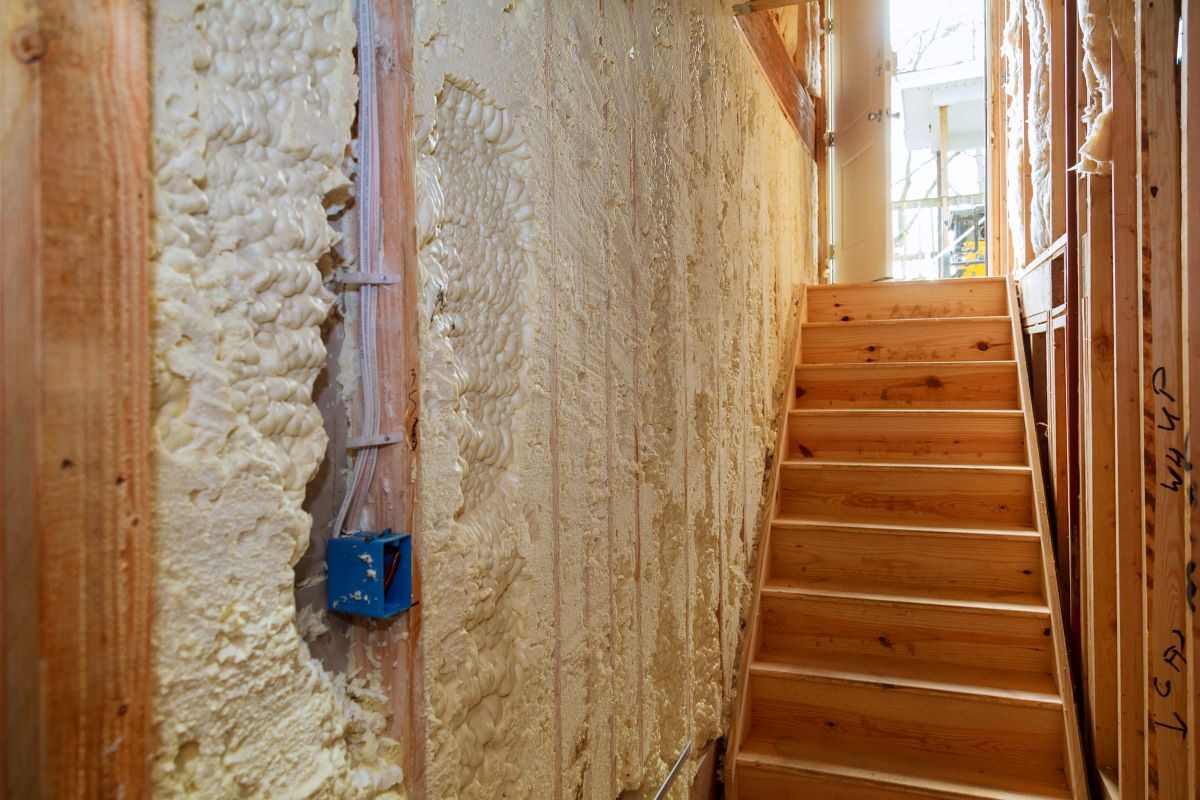
Why Spray Foam Insulation Outperforms Traditional Options
Why Spray Foam Insulation Outperforms Traditional Options
Spray foam insulation outperforms fiberglass and blown-in insulation because it does two jobs at once. It seals air leaks and insulates in a single application, instead of relying on a material that only slows heat transfer. Closed-cell spray foam has a higher R-value per inch than fiberglass or cellulose, and it resists sagging, settling, and moisture damage far better over time. That combination of air sealing, insulating power, and durability is what sets it apart.
Here's what the research shows, and what holds up in real installations.
The R-Value Story Nobody Tells You
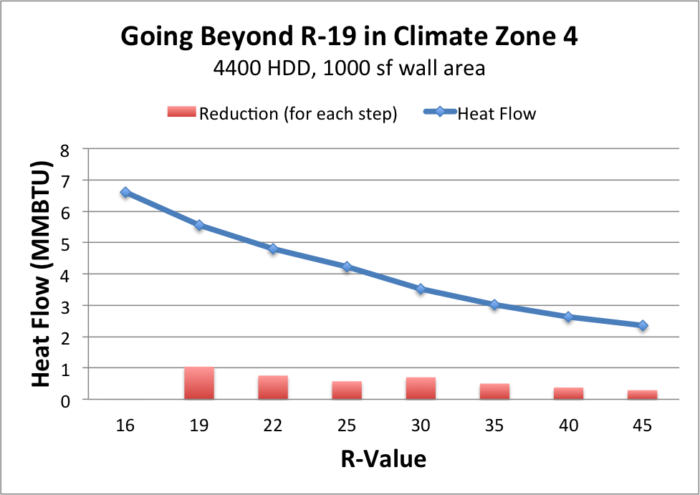
Closed-cell spray foam delivers an R-value of roughly 6.0 to 7.0 per inch, according toDepartment of Energy insulation guidance. Fiberglass batts typically run 2.9 to 3.8 per inch, and cellulose comes in around 3.2 to 3.8 per inch.
On paper, spray foam wins on thermal resistance alone, close to twice as efficient per inch as the alternatives.
But here's what homeowners miss when they focus only on that number: R-value measures resistance to heat flow in a static, controlled lab test. It doesn't account for air leakage, gaps, or moisture movement in an actual wall or attic.
That's where the real performance difference shows up. Unlike fiberglass, which can leave small gaps or compress over time, spray foam expands to seal cavities completely as it cures. It creates an airtight barrier that blocks both conduction, the number R-value measures, and convection, the air movement through gaps that fiberglass alone doesn't address.
How Much Energy Are You Actually Losing?
The numbers get specific when you look at real-world energy loss.
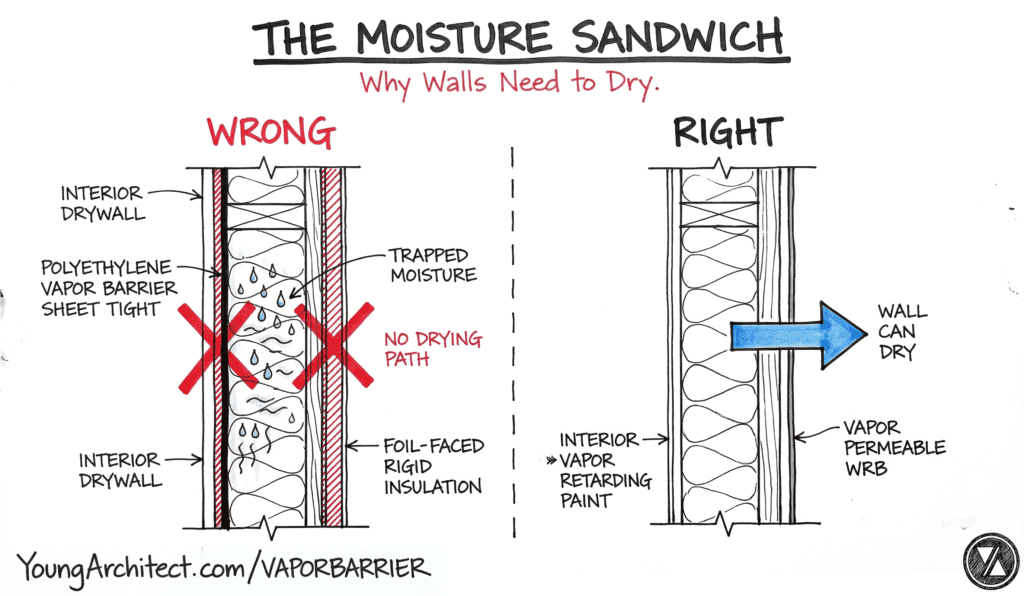
Air leakage accounts for 25 to 40 percent of the energy used for heating and coolingin a typical home, according to Energy Star. That's a significant share of a utility bill, not a minor detail.
Fiberglass doesn't stop that airflow on its own. It slows conductive heat transfer well enough, but it's air-permeable, so gaps around the batts, compressed sections, and the material's own porosity all let air move through.
Spray foam eliminates most of that airflow by expanding to fill cavities and seal cracks around windows, doors, and joists.
Energy Star estimatesthat homeowners who combine air sealing with added insulation save an average of 15 percent on heating and cooling costs, though results vary by climate and by how leaky the home was to begin with. Full spray foam retrofits that replace older, leaky fiberglass are commonly reported in the 20 to 40 percent range by insulation contractors, since spray foam addresses both the R-value gap and the air-sealing gap in a single step.
You also tend to get more consistent comfort throughout the house: fewer cold spots and drafts in upstairs rooms, since the whole envelope gets sealed rather than just insulated.
Climate Makes the Difference Even Bigger
Spray foam's air-sealing advantage matters more in climates with big temperature swings, since that's when leaks and gaps in traditional insulation cause the biggest energy losses.
In a cold Midwest winter or a hot, humid summer, sealing the building envelope can produce meaningful savings, and payback on the upfront cost difference commonly lands in the three-to-six-year range in these climates.
In milder regions, the dollar savings tend to be smaller simply because heating and cooling demands are lower to begin with, so payback can stretch longer.
In areas with harsh winters, intense heat, or high humidity, spray foam's air-sealing and moisture-blocking properties add value beyond the R-value number alone. The same seal that keeps conditioned air in also keeps the structure protected from the mold and rot that come with trapped moisture.
The Moisture Problem You Can't See
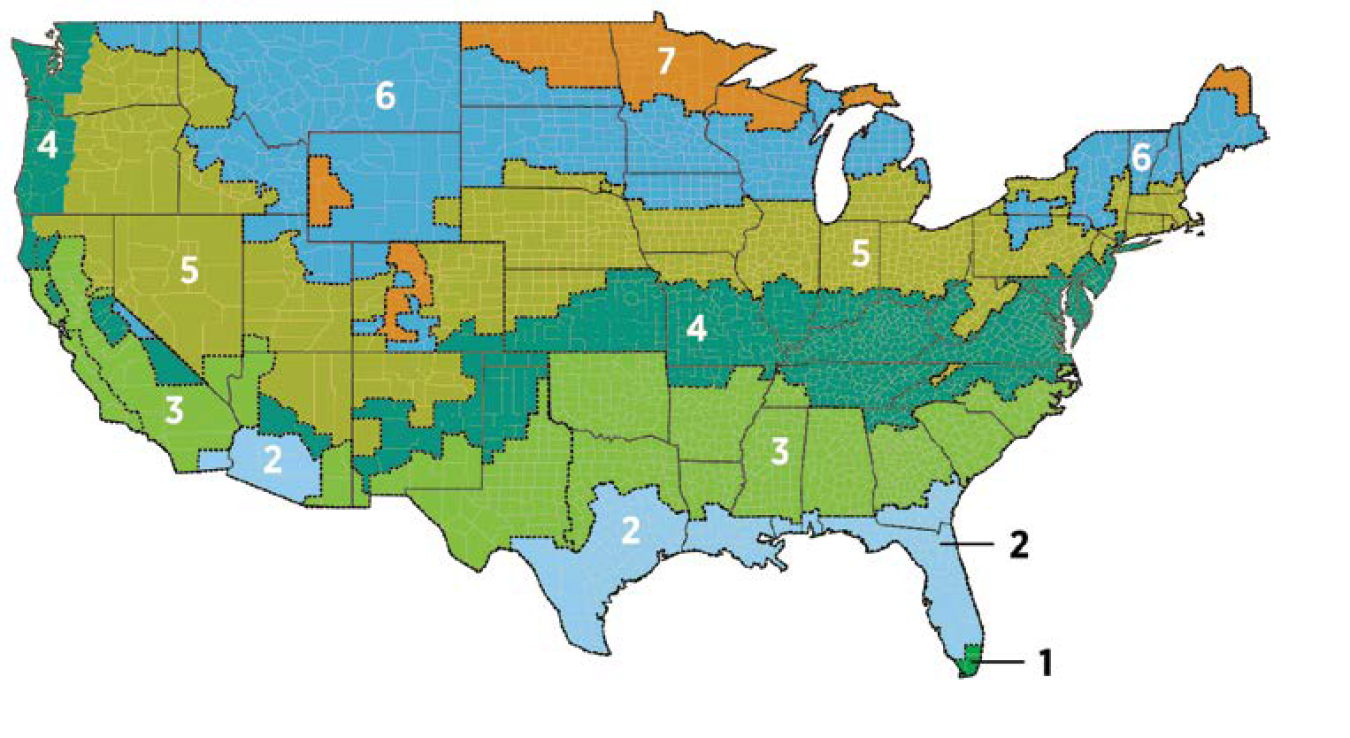
Here's what happens inside a wall cavity when moisture gets in.
With fiberglass, moisture that enters through leaks, condensation, or humidity gets trapped without being properly managed, since fiberglass doesn't form a continuous air or moisture barrier on its own.
That dampness can sit against wood studs, drywall, and subfloors, creating conditions where mold, mildew, and wood rot can take hold over time. The structure gradually weakens, and repairs get expensive.
Closed-cell spray foam expands to fill cavities and seal gaps, creating an airtight layer that also resists water intrusion. It keeps the space thermally efficient while limiting how much moisture can linger inside the walls.
The insulation isn't just saving energy. Done well, it's also protecting the building itself over the long run.
What Fiberglass Failure Actually Costs
When fiberglass fails because of moisture or mold, the costs go well beyond replacing the insulation. Homeowners can end up facing:
Mold remediation:removing contaminated drywall or paneling, cleaning or replacing structural wood, and sometimes treating HVAC systems if spores have spread
Performance loss:wet or compressed fiberglass loses much of its insulating value, so the home becomes drafty and energy bills rise while the damage is happening
Structural repairs:replacing rotted studs or damaged subfloors, with costs that multiply if the problem isn't caught early
What started as a relatively small insulation issue can snowball into a combination of remediation, reconstruction, and higher energy bills. Spray foam's upfront cost looks smaller by comparison when it prevents that chain of problems from starting.
Installation Coverage in Hard-to-Reach Spaces
Spray foam's expansion property matters most in spaces that are genuinely difficult to insulate well with batts or loose-fill material.
In areas like rim joists, cathedral ceilings, or irregularly shaped cavities, fiberglass or cellulose often leaves small gaps, compressed spots, or voids where air can move freely, which undermines the insulation's performance right where it's needed most.
Spray foam starts as a liquid and expands to fill the cavity as it cures, forming a continuous, airtight layer that conforms to the shape of the space. There are no hidden gaps and nothing to settle over time.
For a homeowner, that translates into warmer rooms in winter, cooler rooms in summer, fewer drafts, and a more consistent insulation system in the tricky areas where fiberglass and cellulose tend to underperform.
Long-Term Performance Over Decades
Spray foam is built to hold its performance for decades. Closed-cell foam bonds directly to the surfaces it's applied to, so it doesn't settle, compress, or sag the way batt or loose-fill insulation can. Its R-value drifts slightly in the first several years as it fully cures, then stabilizes, typically settling around R-6.0 to R-6.5 per inch for the long term. From there, it holds that performance and its air seal for decades, since there's no material left to compress or shift.
Fiberglass batts hold up reasonably well if they stay dry and undisturbed, but they're vulnerable to real-world performance loss from moisture exposure, compression (stored boxes in an attic, for instance), or gaps from an imperfect original installation. Loose-fill cellulose carries its own risk: it can settle noticeably over time in an open attic, thinning out and losing R-value in exactly the spots where it settles most.
After a couple of decades, homes insulated with fiberglass or cellulose often have new gaps or thin spots that weren't there on day one. Spray foam's bonded, non-settling structure is what keeps its performance consistent over that same span.
Why Contractors Still Default to Fiberglass
If spray foam performs this well, why isn't it the default?
Mostly cost and familiarity. Fiberglass is cheaper upfront, widely available, and most contractors are already set up to install it quickly. It's often the default choice even when it isn't the best-performing option for a given space.
Spray foam requires specialized equipment and training, which adds to the upfront price, and not every contractor wants to invest in doing it well.
The key is to look past the sticker price and weigh the long-term picture: energy savings, comfort, moisture protection, and structural durability.Ask a contractor how they'd vet those tradeoffs for your project, and whether their recommendation actually accounts for air sealing and long-term performance, not just the lowest bid.
That's usually enough to tell whether the advice is in your best interest or just the easiest option for the installer.
What Goes Wrong With Poor Installation
When spray foam isn't installed correctly, the problems can be subtle at first but carry real consequences over time.
Improper mixing, wrong application thickness, or uneven coverage can leave voids, gaps, or weak spots where air and moisture still get through, which defeats the purpose of the insulation. Poor technique can also cause off-gassing issues, excess expansion that deforms framing, or roof and wall warping if it's applied too aggressively.
A good way to gauge whether a contractor knows their craft is to ask about:
Certifications and training
Experience with similar projects
Whether they do a thorough site assessment before starting
References or past project examples
How they document the finished work
A professional installer will walk you through the application process, flag potential trouble spots like rim joists and cathedral ceilings ahead of time, and provide clear documentation when the job is done.
If someone is pushing spray foam as a one-size-fits-all fix without addressing any of this, that's usually a sign they're more focused on closing the sale than on getting the installation right.
Open-Cell vs. Closed-Cell: Choosing the Right Type

The choice between open-cell and closed-cell spray foamcomes down to density, rigidity, and moisture resistance.
Open-cell foam is lighter, more flexible, and works well for sound dampening and filling irregular spaces. It's more permeable to water vapor, though, so it's best suited to interior walls or areas where moisture isn't a major concern.
Closed-cell foam is denser and more rigid, and it acts as both an air barrier and a moisture barrier. That makes it the better fit for basements, crawlspaces, exterior walls, and roofs, where blocking water intrusion or controlling humidity matters most.
We typically recommend closed-cell foam anywhere structural protection and moisture control are priorities, and open-cell for interior partitions, attics, or spaces where sound control is the main goal.
Choosing the right type comes down to matching the foam's properties to the environment and the specific vulnerabilities of that part of the home, not assuming one type fits every space.
What You Should Understand Before Deciding
Insulation isn't just about filling a cavity or hitting an R-value number. Done well, it's a complete system that manages heat, air, and moisture together over the long term.
Fiberglass can seem like enough because it's cheap and familiar. But it leaves gaps, can settle or get damp, and doesn't do much to protect the structure from hidden damage or ongoing energy loss.
Spray foam, installed correctly, works as insulation, an air seal, and a moisture barrier all at once. It keeps homes more comfortable, lowers bills, and helps prevent the kind of mold or rot problems that get expensive to fix later.
The upfront investment protects more than comfort. It protects the structural integrity of the home, which is the part most homeowners don't factor in until it's already a problem. That's the shift that turns this from a short-term expense into a long-term decision.
What to Expect During Installation
When you schedule spray foam installation, the crew preps the area first, covering floors, vents, and anything else that needs protecting. Then they measure and mix the foam carefully before applying it in layers to fill each cavity.
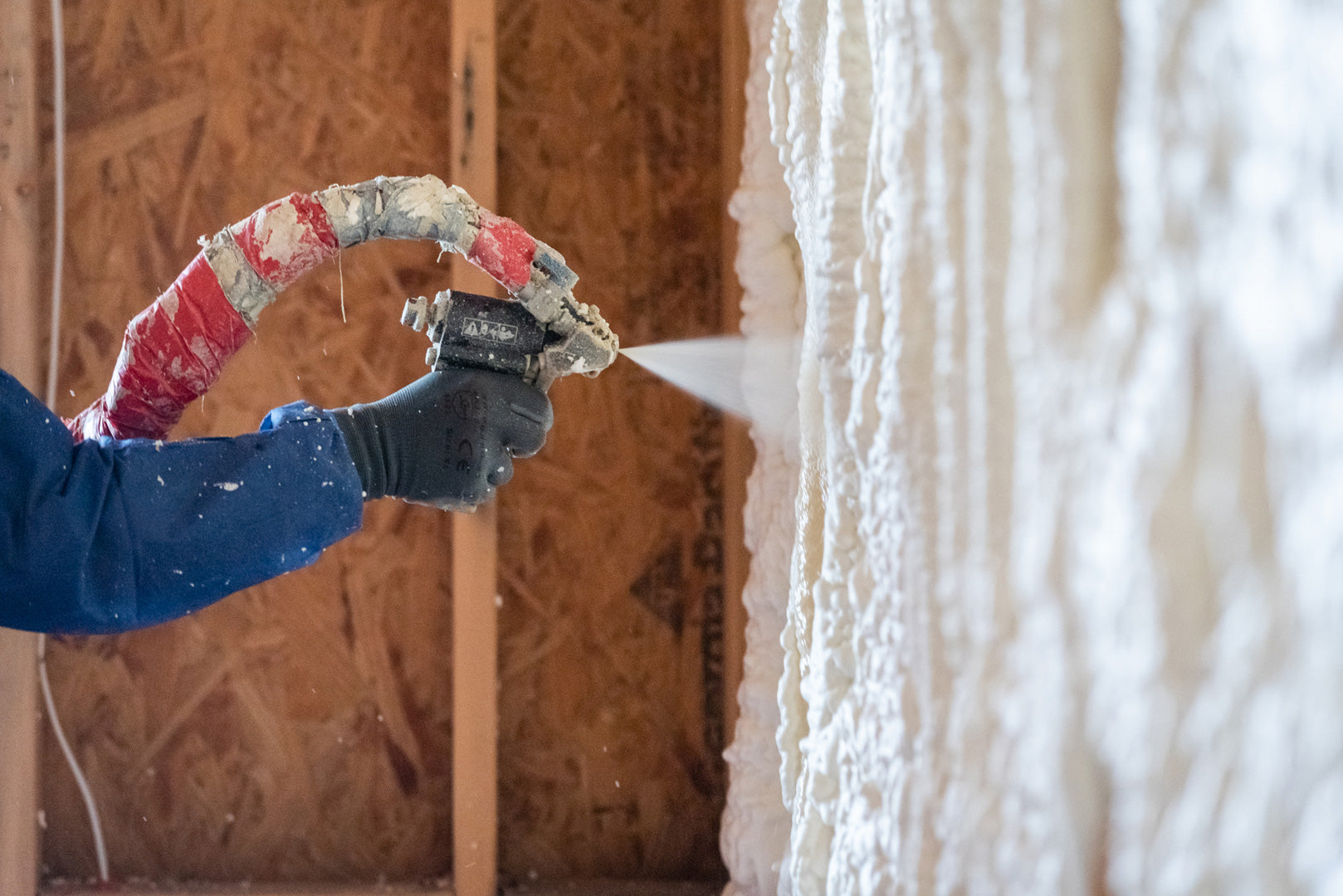
The process itself moves fairly quickly, but the foam needs to expand evenly and fully seal each cavity without spreading onto surfaces it shouldn't touch.
Signs the job was done right:
A consistent, smooth foam layer in every cavity
Tight seals around rim joists and penetrations
No visible gaps or voids
A noticeable improvement in air-tightness and comfort once the space is closed up
Signs something might be off:
Uneven or lumpy foam
Sections that look visibly thin or missing
Strong chemical odors that linger well past the initial curing period
Areas where drafts or air leaks are still noticeable
A skilled installer will address any issues on the spot and walk you through the results, so you know your insulation is performing the way it should from day one.
The difference between spray foam and traditional insulation shows up in your energy bills, your comfort, and the long-term health of your home. If you want a straight answer on what makes sense for your project, Driftless Foam can walk through the tradeoffs for your specific space.
