How Spray Foam Basement Insulation Can Save You Money on Energy Bills
Heat rises, but that doesn't mean your basement is off the hook when it comes to energy loss. Cold basement air and an uninsulated rim joist pull heated air downward from the rest of the house while letting outside cold seep in, forcing your furnace to work harder just to keep the upper floors comfortable. Sealing and insulating the basement with closed-cell spray foam stops this cycle at the source, which is why it often leads to a noticeable drop in monthly heating costs.
If your basement feels cold, damp, or drafty, and your energy bills climb every winter, the basement is likely playing a bigger role in that than you'd expect.
Why the Basement Gets Overlooked
Most homeowners think about insulation in terms of the attic first, and for good reason. Heat does rise, and an uninsulated attic is a well-known energy drain. But this focus on the attic often means the basement gets ignored entirely, even though it's just as connected to the rest of the home's heating and cooling system.
The basement is where your rim joist sits. This is the band of wood that runs along the top of your foundation wall, right where the house framing meets the concrete. It's one of the most common places for air to leak into and out of a home, and in most older houses, it's completely uninsulated or covered with a thin layer of fiberglass that was never sealed properly in the first place.
How Heat Loss Actually Happens Through an Uninsulated Basement
Here's the mechanism in simple terms. Concrete foundation walls and rim joists conduct cold directly into the basement space. That cold air is denser and sinks, but it doesn't stay contained. It moves upward through gaps around plumbing, wiring, and stairwells, pulling heated air down from the floors above and replacing it with cold air from below.
At the same time, any gaps in the rim joist act like small open windows around the entire perimeter of the house. Warm air escapes through these gaps, and cold outside air gets pulled back in to replace it. Your furnace responds by running longer and more often, even though the thermostat upstairs might read a perfectly normal temperature.
This is a continuous loop. The basement doesn't just lose its own heat. It actively pulls heat away from the rest of the house and lets cold air work its way in, which is why sealing it properly has such a noticeable effect on the whole home's energy use.
How Closed-Cell Spray Foam Stops This Process
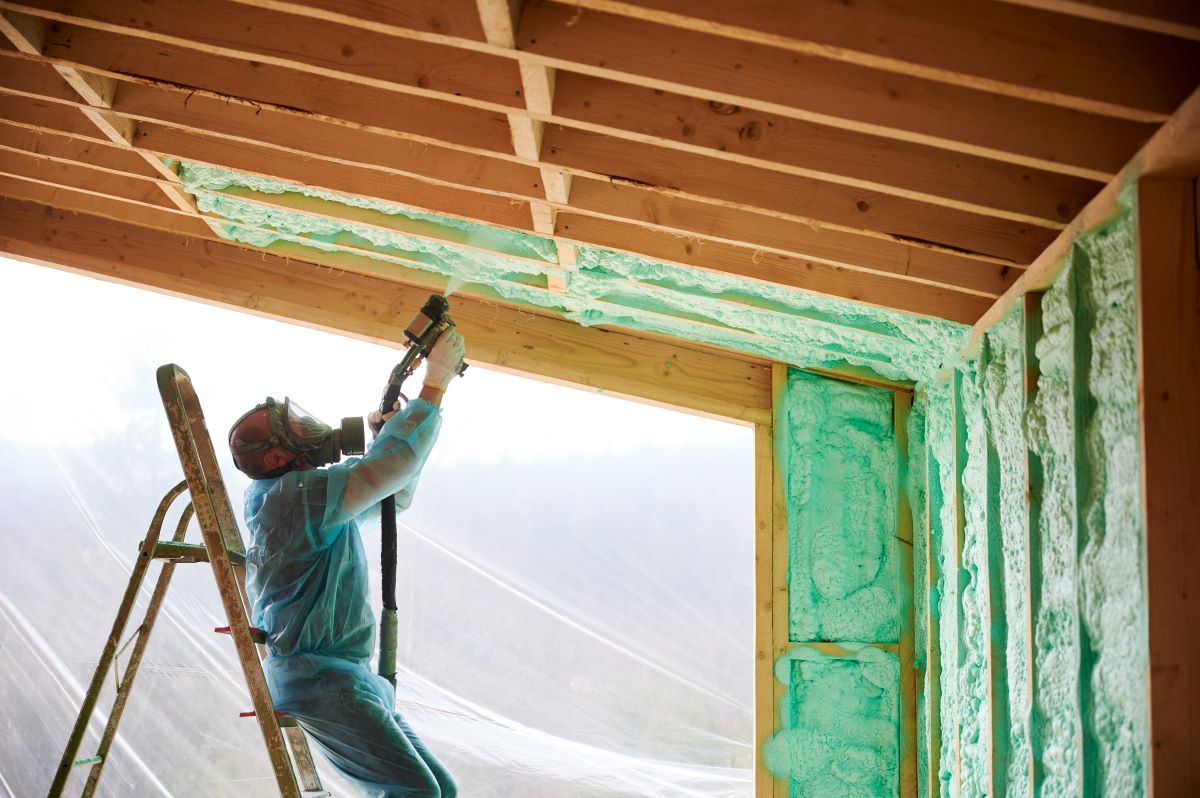
Closed-cell spray foam is applied directly to the rim joist and foundation walls, where it expands to fill every gap, seam, and crack. Because it bonds directly to the surface as it cures, it creates one continuous air barrier around the entire basement perimeter, closing off the exact points where air was leaking in and out.
This does two things at once. It stops the air leakage that was pulling heated air downward and letting cold air in, and it adds real insulating value, roughly R-6 to R-7 per inch, to walls that previously had none. You can read more about how closed-cell foam performs in general in this piece on the benefits of closed cell spray foam.
Key Benefits of Insulating Your Basement This Way
Lower monthly energy bills. Once the rim joist and foundation walls are sealed, your furnace doesn't have to compensate for constant heat loss through the basement. Homeowners often notice this within the first full heating season. One local example of this kind of impact is covered in how one homeowner cut their energy bills by 47% with spray foam.
A warmer main floor. Since cold basement air was pulling heat downward, sealing it off often makes the floor directly above the basement noticeably warmer, without any change to the thermostat setting.
Moisture control. Closed-cell foam resists moisture, which matters in a basement environment that's naturally more humid than the rest of the house.
Less strain on your HVAC system. With one of the biggest sources of air leakage sealed off, your furnace and air conditioner run in shorter, less frequent cycles, which reduces wear over time.
Better indoor air quality. Sealing off gaps also limits how much moisture and outside air move through the basement, which can affect air quality throughout the house. This connects closely to the points covered in how spray foam insulation transforms indoor health.
Addressing the Common Myth: "It's Not Worth It If the Basement Isn't Finished"
A lot of homeowners assume basement insulation only matters if the space is finished and actively used as living area. That's not accurate. Even an unfinished basement used only for storage or utilities is directly connected to the rest of the home's heating and cooling system through the rim joist and foundation walls.
Whether or not you spend time in the basement, an uninsulated one is still pulling heat out of the rooms above it and letting cold air work its way in. The energy savings from sealing it apply to the whole house, not just the basement itself. If you're seeing other signs of poor insulation elsewhere in the home, it's worth reviewing the full list of signs your home needs spray foam insulation to see how the basement fits into the bigger picture.
Find Out How Much You're Losing Below Ground Level
A cold basement isn't just uncomfortable. It's often one of the biggest hidden contributors to a high winter heating bill, working quietly in the background while the thermostat upstairs tells a different story. Sealing the rim joist and foundation walls with closed-cell spray foam addresses the problem at its source instead of just compensating for it with a higher furnace setting.
If you want to find out how much of your home's total energy loss is happening below ground level, explore Driftless Foam's spray foam insulation services and get a free quote for your basement.
