
Research Reveals How Spray Foam Insulation Transforms Indoor Health
Research Reveals How Spray Foam Insulation Transforms Indoor Health
Most homeowners think about insulation in terms of temperature and energy bills. That's only part of the picture. Sealing a home changes the entire indoor air environment, for better or worse, depending on how the work is done.
Spray foam creates one of the tightest building envelopes available today. Used correctly, that airtightness keeps outdoor pollutants and allergens out and helps control the moisture that leads to mold growth. Used without attention to ventilation, the same airtightness can trap indoor-generated pollutants instead of venting them out. Building science treats insulation as an active part of a home's air quality, not just a line item on the energy bill.
Allergens and Outdoor Pollutants
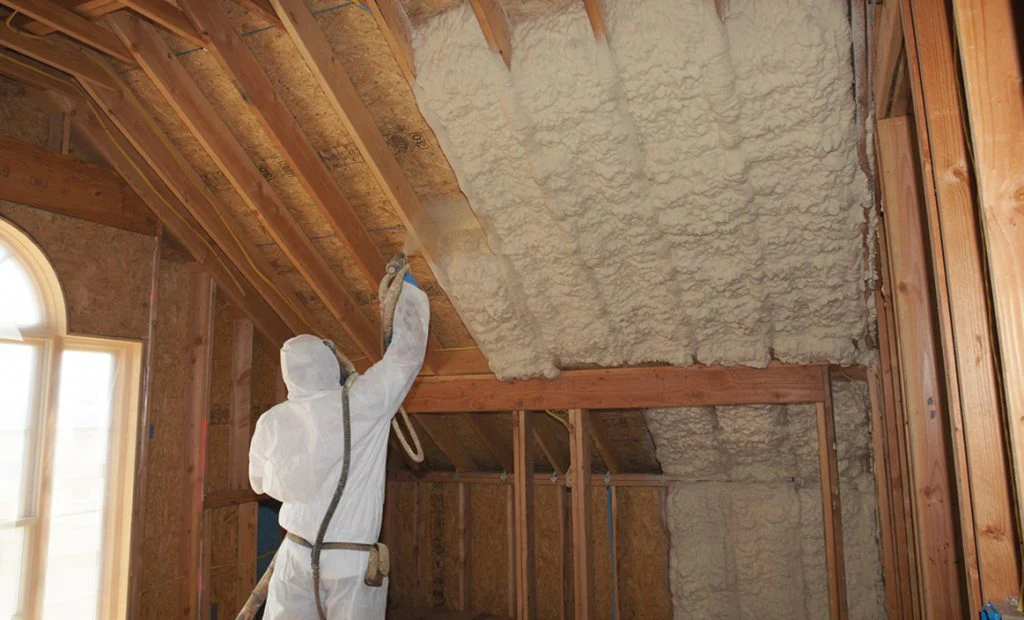
Air leakage is one of the main ways pollen, dust, and fine particulate matter get into a home. When a home is properly air sealed, less of that outdoor material has a path in.
Spray foam reduces allergen exposure in three main ways:
It closes the infiltration pathways around framing, wiring, and rim joists where pollen and dust typically enter.
It reduces the moisture levels that allow mold spores to establish and spread.
It limits the pathways particles use to circulate through duct systems and wall cavities.
This matters most for households managing asthma, allergies, or other respiratory sensitivities, since outdoor-origin particulate matter is a well-documented trigger for those conditions.
Keeping Fresh Air in the Balance
Airtightness solves one problem and can create another if it isn't paired with ventilation.
When a home's air leakage drops below the level needed for adequate air exchange, indoor-generated pollutants like carbon dioxide and volatile organic compounds can build up instead of being diluted by fresh air. The American Society of Heating, Refrigerating and Air-Conditioning Engineers sets the minimum residential ventilation rate at 0.35 air changes per hour, according to guidance published by theEPA.
Carbon dioxide is a useful stand-in for how well a space is being ventilated. A Harvard T.H. Chan School of Public Health study published in Environmental Health Perspectives found that participants' cognitive test scores dropped measurably as indoor CO2 concentrations climbed into the 950 to 1,400 parts-per-million range, a level that's easy to reach in a tightly sealed room without adequate air exchange.
None of this means airtight homes are unhealthy. It means a properly sealed home needs a deliberate way to bring in fresh air, whether that's a heat recovery ventilator, a timed exhaust fan, or another mechanical system sized to the home. Sealing and ventilation work as a pair, not as substitutes for each other.
Everyday Sources of Indoor Pollutants
Once a home is well sealed, what happens on the inside matters more, since there's less outdoor air diluting it.
Furniture, flooring, and cabinetry made with pressed wood or synthetic materials can off-gas compounds like formaldehyde for months or years, not just when new. Cleaning products, air fresheners, and gas stoves add to the same load. According to theEPA, concentrations of many volatile organic compounds are consistently higher indoors, in some cases up to ten times higher, than outdoors.
None of these sources are extreme on their own. In a well-sealed home without adequate ventilation, they simply have nowhere to go, which is exactly why the ventilation step above isn't optional.
Moisture, Mold, and Respiratory Health
Excess moisture is one of the main drivers behind mold growth and dust mites, both well-established triggers for asthma and allergic reactions.
The National Academies' Institute of Medicine reviewed the evidence in its2004 report on damp indoor spaces and found sufficient evidence linking damp indoor environments and mold to upper respiratory symptoms, coughing, wheezing, and asthma symptoms in people already sensitized to these triggers.
Closed-cell spray foam resists moisture well enough to act almost like its own vapor barrier in many applications, which is part of why it's the standard choice for basements and rim joists, where dampness is a persistent concern. By limiting how much humid air reaches wall and attic cavities, it helps prevent the conditions mold needs to take hold in the first place, rather than treating the problem after it starts.
Finding the Right Humidity Range
Moisture problems run in both directions. Indoor air that's too dry creates its own issues: dry throat, irritated sinuses, itchy skin, and mucous membranes that don't trap airborne particles and pathogens as effectively.
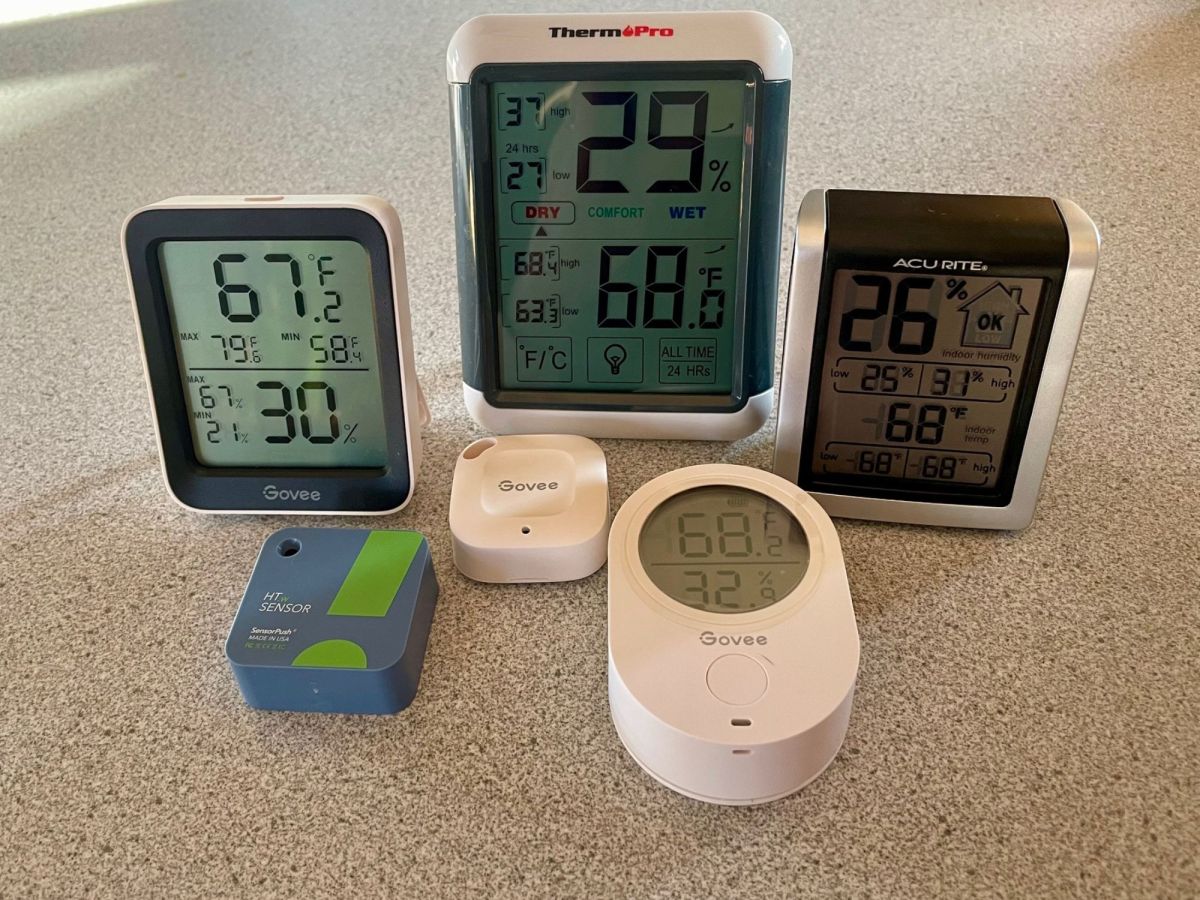
The generally recommended target for indoor relative humidity is 30 to 50 percent. Homes that stay in that range tend to avoid both the mold-friendly conditions at the high end and the dryness problems at the low end, which shows up most often during heating season, when furnaces run for long stretches with little natural moisture exchange from outside air.
A well-sealed home makes it easier to hold a consistent humidity range, since it isn't constantly trading conditioned air for whatever the outdoor conditions happen to be. That consistency still depends on having a humidification or dehumidification plan suited to the specific home and climate, not on air sealing alone.
Noise Reduction: What Spray Foam Actually Changes
Noise control is one of the most commonly cited benefits of spray foam, and it deserves an accurate explanation rather than an inflated one.
Laboratory testing on the raw acoustic performance of insulation materials doesn't show spray foam dramatically outperforming fiberglass. Closed-cell spray foam is dense and rigid, which makes it a comparatively poor sound absorber, and industry acoustic testing compiled by the Gypsum Association has found it can score lower on Sound Transmission Class than fiberglass in the same wall assembly. Open-cell spray foam performs roughly on par with standard fiberglass in most lab testing.
What spray foam does provide, and what fiberglass generally can't, is complete air sealing. Sound travels easily through the same small gaps that let air leak around outlets, top plates, and framing penetrations. Because spray foam expands to fill those gaps entirely, it closes the flanking paths that let sound bypass a wall assembly. In real buildings, rather than a sealed test chamber, that air-sealing effect is why homes insulated with spray foam are often reported as noticeably quieter, even when the foam itself isn't acoustically superior to fiberglass on paper.
For anyone choosing an insulation type specifically for noise control, that distinction matters. The value here comes from what spray foam does to airflow, not from the foam material acting as a sound-absorbing product in its own right.
Noise, Sleep, and Long-Term Health
Noise isn't just an annoyance. The World Health Organization'sEnvironmental Noise Guidelines, published in 2018, link chronic exposure to environmental noise, especially at night, to sleep disturbance, elevated cardiovascular risk, and other stress-related health effects, even at levels many people consider unremarkable in daily life.
Reducing how much outside noise and vibration reaches the inside of a home, through the air-sealing effect described above and a properly insulated ceiling or wall assembly, supports the kind of quieter, more consistent sleep environment that guideline connects to better long-term health outcomes.
The Economic Case for Acting Early
Preventive building improvements, sealing, insulating, and controlling moisture, generally cost less over time than reacting to the problems that show up after the fact.
On the health side, the cost of dampness and mold exposure in U.S. homes is well documented. Researchers atLawrence Berkeley National Laboratory estimated that asthma attributable to dampness and mold costs the U.S. approximately $3.5 billion a year in medical expenses. That figure doesn't include the separate costs of mold remediation, structural repairs, or HVAC systems replaced early from constant overuse.
Addressing insulation and air sealing issues early is typically a one-time investment. Waiting tends to layer costs on top of each other instead: higher energy bills in the meantime, then remediation, then repairs, often adding up to several times the cost of fixing the underlying problem when it was first noticeable.
What This Means for Your Home
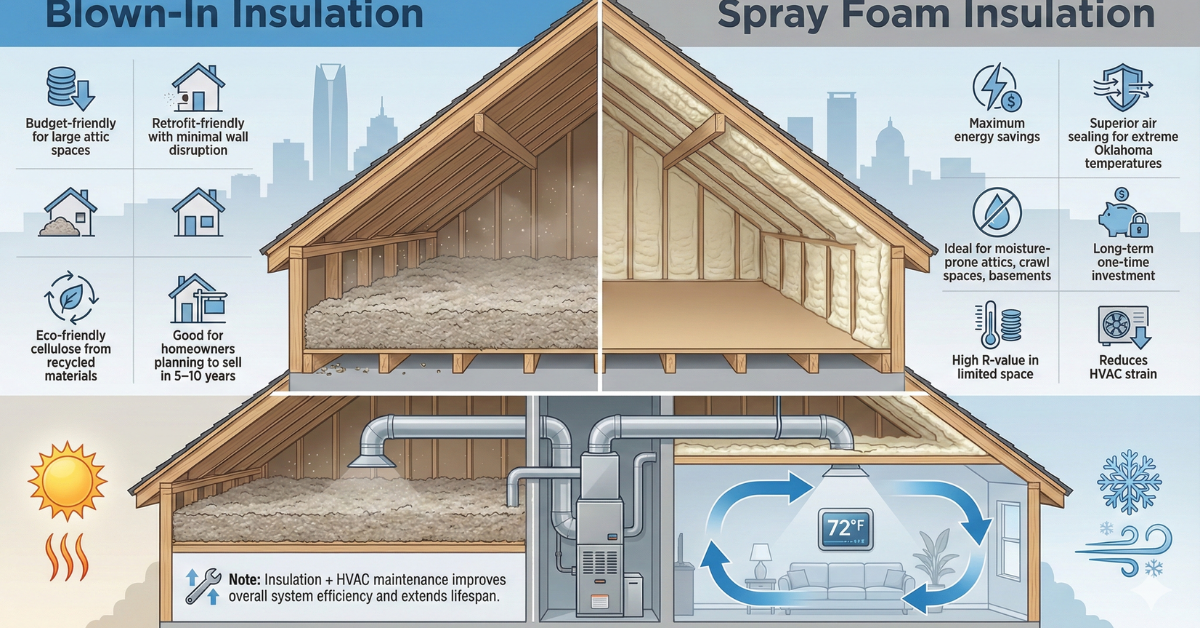
Insulation isn't a passive material that just sits in the walls. Done well, it's an active part of the system that controls what enters a home's air and how long it stays there.
The healthiest result comes from getting both halves right: an airtight envelope that keeps outdoor pollutants, allergens, and excess moisture out, paired with deliberate ventilation that keeps indoor-generated pollutants from building up. Spray foam handles the sealing half about as completely as any material available. The ventilation half still needs its own plan, sized to the specific home.
If you're weighing whether your current insulation and air sealing is doing this job, or you want a ventilation plan built around a spray foam retrofit, Driftless Foam's team can walk through bothas part of a project assessment.
