5 Signs Your Home Needs New Insulation
Most homeowners assume their heating and cooling costs are just the cost of comfort. They pay the bill every month, sigh at the total, and move on. What they don't realize is that a significant portion of that bill isn't buying them comfort at all. It's escaping through the walls, attic, floors, and crawl space because their insulation is failing, outdated, or was never adequate to begin with.
According to theU.S. Department of Energy, homeowners can save up to 15 percent on heating and cooling costs by adding insulation and sealing air leaks. For a household spending $200 a month on HVAC, that's roughly $360 a year in recoverable losses. For commercial properties and agricultural facilities, the numbers run far higher.
The challenge is that insulation failure is mostly invisible. Your walls look fine. The house feels roughly okay, at least some of the time. But the signs are there if you know what to look for. This guide walks through all five, explains what each one is costing you, and lays out a clear next step for each.
The 5 Signs Your Home Needs New Insulation (Quick Answer)
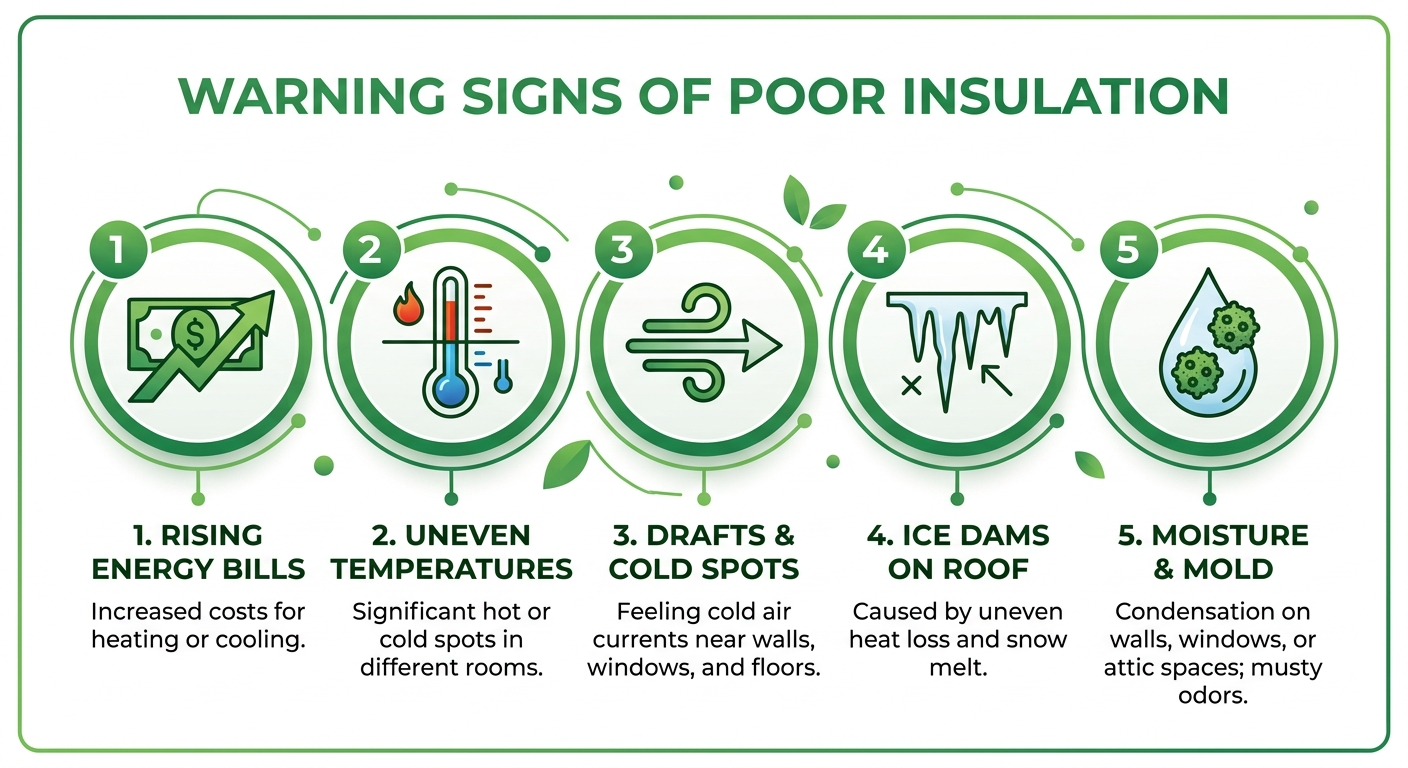
If you want the short version before diving into the details, here are the five signs to watch for:
Unusually high energy bills that increase year over year even when usage habits stay the same
Uneven temperatures between rooms, with some spaces noticeably colder or warmer than others
Drafts, cold walls, and cold floors that persist even when the heating system is running
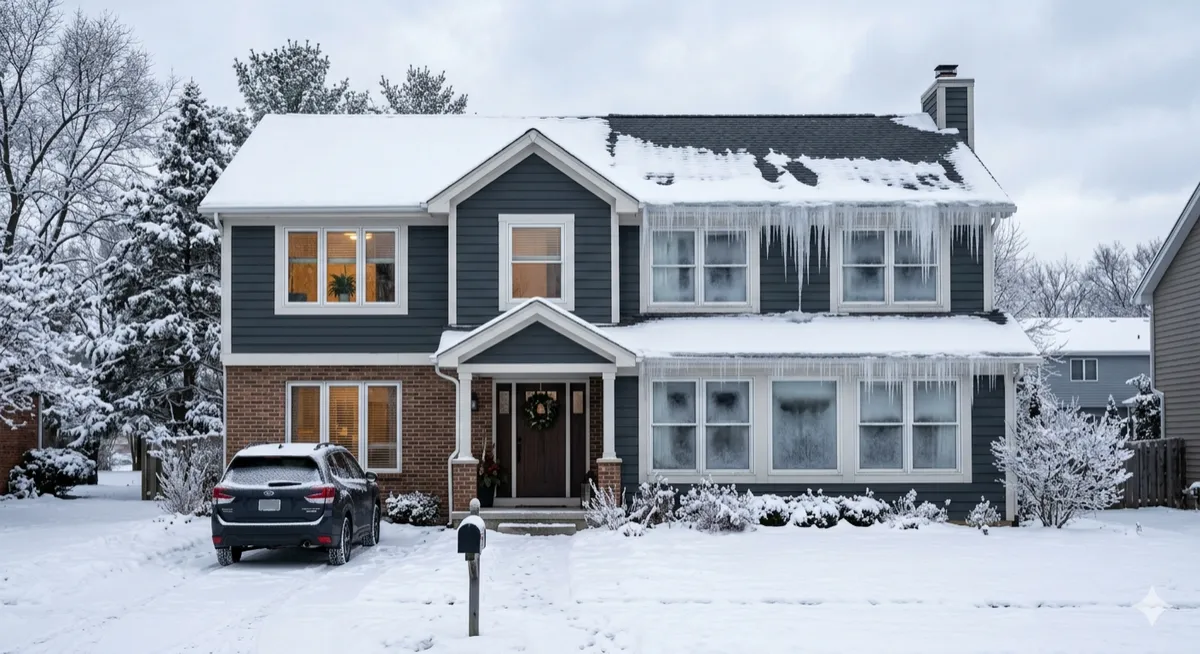
Ice dams or icicles forming on the roof edge during winter
Visible moisture, condensation, or mold inside walls, in the attic, or in the crawl space
Each of these points to a specific insulation failure mode. Here's what's actually happening behind each one.
Sign 1: Your Energy Bills Keep Climbing for No Clear Reason
What's Happening Inside Your Walls
When insulation degrades, settles, or was never properly installed, the HVAC system has to work harder to hold the temperature on the thermostat. Every extra hour it runs is paying for energy that isn't delivering comfort, it's just compensating for heat escaping in winter or entering in summer.
Fiberglass batt insulation can settle and compress over time, losing R-value. Spray foam can develop cracks if a building shifts. Blown-in cellulose can absorb moisture and clump together, opening gaps. Even insulation that was excellent when installed may not be performing at the level your energy bills assume.
How Much Is This Costing You Each Month?
Air sealing and insulation deficiencies account for25 to 40 percent of the energy used for heating and coolingin a typical home, according to Energy Star. For a household with an average monthly energy bill of $130 to $400 depending on region and season, that translates to roughly:
Mild climate homes: $30 to $80 in avoidable waste per month
Cold climate homes (zones 5 to 7): $80 to $200 in avoidable waste per month
Large commercial or agricultural properties: $200 to $1,000 or more per month
A typical example of how this plays out:a homeowner in a cold climate notices their winter gas bills have crept up over several years, say from $180 a month to $270 a month, without any change in habits. An energy audit reveals that decades-old attic insulation has settled to a fraction of its original R-value, well below what the climate zone calls for. After upgrading the insulation and sealing the attic air barrier, bills commonly drop back into the $190 to $200 range, with the project paying for itself in energy savings within about three to five years.
How to Diagnose This Sign
Pull your utility bills for the past 24 months and plot them on a simple chart.
Compare them to weather data for your area (heating and cooling degree days) to rule out weather as the cause.
If bills are rising faster than weather patterns or utility rate increases justify, suspect insulation or air sealing failure.
Book a professional energy audit with a blower door test to pinpoint exactly where the losses are occurring.
Find a certified energy auditor through theBuilding Performance Institute (BPI), which maintains a national directory of credentialed home performance professionals.
Sign 2: Some Rooms Are Freezing While Others Are Stifling
Why Temperature Inconsistency Is a Red Flag
A properly insulated and air-sealed home holds a remarkably consistent temperature from room to room. The thermostat setting in the hallway should feel about the same in every bedroom, the living room, and the basement. When it doesn't, that points to a problem in the building envelope, not just the thermostat.
Common culprits include:
An uninsulated or under-insulated attic above the top floor, often the single biggest driver of floor-to-floor temperature differences
Missing or damaged insulation in specific wall cavities, often from a partial renovation, pest damage, or water intrusion that compressed or destroyed the original material
Rim joist areas where the floor framing meets the foundation wall, one of the most common and overlooked sources of cold penetration into first-floor rooms
Knee walls in finished attic spaces that separate conditioned from unconditioned areas and are frequently under-insulated
The HVAC Wear and Tear Cost You're Not Counting
Temperature inconsistency doesn't just make certain rooms uncomfortable. It puts the HVAC system into a continuous, losing battle, cycling on and off more often trying to satisfy a thermostat that can't account for the cold zones. Over time that shows up as:
Accelerated wear on the compressor, heat exchanger, and blower motor
A shortened equipment lifespan, potentially pulling a $5,000 to $15,000 replacement forward by three to seven years
More frequent repairs, typically averaging $200 to $600 per service call
What a Professional Thermal Scan Will Show You
A qualified insulation contractor or energy auditor can run a thermal imaging inspection, often included in a comprehensive energy audit. TheRESNET national directorycan help you find a certified home energy rater in your area who offers this service.
Thermal imaging makes insulation gaps and air leaks visible in a way no other inspection method matches. An infrared camera shows exactly which walls, floors, and ceiling assemblies are underperforming, which supports a precise remediation plan instead of guesswork.
Sign 3: You Feel Drafts Even When Every Window and Door Is Closed
Drafts vs. Insulation Failure
Many homeowners assume drafts mean their windows or doors need replacing. Sometimes that's true. More often, the sensation of a draft in a closed room actually comes from cold air infiltrating through the building structure itself, through gaps and uninsulated penetrations that have nothing to do with windows or doors.
Cold wall surfaces also create a convective loop: when an exterior wall's interior surface is noticeably colder than the room, the air near it sinks, slides along the floor, and rises again after warming. That constant circulation feels exactly like a draft, even in a room that's technically air-sealed. Caulk doesn't fix this. Insulation that brings the wall surface temperature closer to room temperature does.
Where the Air Is Actually Getting In
Air sealing research summarized by university extension programs, based on Energy Star data, breaks down typical residential air leakage this way:
(Source:Purdue Extension, "Saving Energy in Your Home: Air Leaks", citing Energy Star data)
The takeaway is worth sitting with: windows and doors together account for about a fifth of typical air leakage. Homeowners who spend thousands replacing windows while leaving attic bypasses, rim joists, and plumbing penetrations unsealed are often solving the smaller part of the problem.
Agricultural and rural property note: In barns, poultry houses, and metal agricultural buildings, drafts are especially costly because large interior volumes lose heat faster than residential spaces. Industry and extension sources commonly cite heating cost reductions in the range of 15 to 40 percent from proper insulation and air sealing in livestock facilities, directly improving the bottom line for operations that heat year-round.
The DIY Draft Test You Can Do Today
On a cold, windy day, walk slowly around your home with a stick of incense or a single candle. Hold it 2 to 3 inches from:
Electrical outlets and switch plates on exterior walls
The bottom edge of baseboards along exterior walls
The top of window and door frames
The attic hatch or pull-down stair frame
Any area where pipes or wires penetrate exterior walls or the top plate
Smoke drift or flame deflection indicates an air leak. Mark each spot with painter's tape. The number of spots you find gives you a pretty good sense of how much work the envelope needs.
Sign 4: You See Ice Dams or Heavy Icicle Formation Every Winter
Why Ice Dams Are an Insulation Problem, Not a Roofing Problem
A row of icicles hanging from the eaves looks dramatic, and a lot of homeowners treat it as a seasonal curiosity. In reality, it's a warning sign that attic insulation and ventilation are seriously deficient, and it's causing damage you can't see until it becomes expensive.
Ice dams form through a specific process:
Heat escapes through an inadequately insulated attic floor or roof assembly and warms the underside of the roof deck.
Snow on that warm section melts and flows down toward the colder eave overhang, which isn't warmed by attic heat.
The meltwater refreezes at the cold eave and builds into an ice dam.
Later snowmelt backs up behind the dam, forcing water under the shingles and into the roof structure and interior.
The Real Cost Goes Well Beyond the Icicles
The hidden cost of repeated ice dam cycles includes:
Interior water damage:stained and bulging ceilings, damaged drywall, and ruined insulation that itself needs replacing
Structural wood decay:roof rafters, ridge boards, and wall top plates that rot from repeated soaking and drying
Mold growth:water entering through ice dams creates ideal conditions for mold in attic cavities and wall assemblies
Shingle and flashing damage:ice expansion tears shingles from the deck and lifts flashing, creating more entry points
Gutter damage:ice dam weight routinely tears gutters from their fascia attachments
A single severe ice dam event can cause $5,000 to $20,000 in water damage repairs, not counting mold remediation if it isn't caught quickly.
Properly insulating an attic to the recommended R-value for a given climate zone (R-38 to R-60 depending on location) typically costs $1,500 to $4,000 for a 1,500 square foot attic using blown-in insulation. That investment eliminates ice dam risk, cuts heating costs, and commonly pays back within three to five years in energy savings alone, before counting avoided water damage.
What the Fix Actually Looks Like
TheEnergy Star attic insulation programrecommends a two-part approach:
Air seal first:close every penetration in the attic floor (plumbing, wiring, light fixtures, partition walls) before adding insulation, since air movement through gaps undermines R-value regardless of how much insulation sits on top of it.
Insulate to the correct R-value for the climate zone:use theDOE climate zone mapto confirm the target for your area.
Keep attic ventilation working:soffit and ridge vents need to stay clear after insulation goes in, to maintain the cold roof deck temperature that prevents uneven snowmelt.
Sign 5: You Notice Moisture, Condensation, or Mold Inside Your Home
Why Insulation and Moisture Problems Are Always Connected
Moisture in a building assembly almost always comes from one of two sources: water intrusion from outside, or condensation forming inside a wall or roof assembly when warm, humid air meets a cold surface. Proper insulation prevents the second category almost entirely, by keeping cold surfaces warm enough that condensation can't form in the first place.
TheBuilding Science Corporationhas documented extensively that most moisture damage in modern buildings comes from air movement carrying warm, humid air into cold cavities, not from vapor diffusion through materials. That means air sealing and insulation are the primary defense, not just a vapor barrier on its own.
Warning Signs That Point to Insulation-Related Moisture
Condensation on interior window glass every winter morning:high interior humidity combined with cold surface temperatures, a sign the envelope is too cold from inadequate insulation
Frost or condensation in the attic on cold mornings:warm interior air is reaching an inadequately air-sealed attic and condensing on the cold roof structure
Damp or musty odors in crawl spaces or basements:uninsulated concrete walls and floors create cold surfaces year-round that attract condensation
Visible mold on interior wall surfaces, typically in corners:a classic pattern showing a thermal bridge is dropping that surface below the interior air's dew point
Water stains on ceilings below an attic:often blamed on roof leaks, but frequently the result of condensation on an under-insulated roof deck
Health and liability note:theEPAclassifies mold exposure as a significant health hazard, particularly for people with respiratory conditions, allergies, or compromised immune systems. Commercial property owners and landlords also face real liability exposure when mold tied to envelope deficiencies is discovered by tenants. Addressing the insulation failures that enable mold is both a health and a legal priority, not just a comfort issue.
The Compounding Cost of Moisture Left Unaddressed
Unlike energy waste, which costs a fairly predictable amount every month, moisture damage tends to compound. A rough trajectory looks like this:
What These 5 Warning Signs Are Costing You
SignWhat it's typically costingPriorityRising energy bills$30-$1,000+/month depending on property type and climateHighUneven room temperaturesFaster HVAC wear, $200-$600 per service callHighPersistent draftsComfort loss and wasted conditioned air, often 20%+ of leakage from non-window/door sourcesMediumIce dams$5,000-$20,000 in water damage risk per severe eventUrgentVisible moisture or mold$500 to $100,000+ if left unaddressed for yearsUrgent
Most homes with poor insulation show multiple signs at once, which means the real cost is usually additive across categories. A home with all five active simultaneously can be wasting $3,000 to $12,000 a year in energy losses, moisture risk, and accelerated equipment wear, against a typical comprehensive insulation upgrade cost of $3,000 to $10,000. The math tends to favor acting sooner rather than paying month after month.
What to Do When You Spot the Signs: A Step-by-Step Action Plan
Step 1: Start With a Professional Energy Audit
Before spending a dollar on materials or installation, a professional energy audit with a blower door test gives you an objective, measured picture of where the building envelope is failing and by how much. Without that baseline, you're guessing.
A comprehensive energy audit typically costs $200 to $600 and often pays for itself within the first month of savings after improvements are made. Look for a BPI-certified professional through theBPI contractor directoryor a RESNET-certified HERS rater through theRESNET directory.
Step 2: Prioritize by Return on Investment
Not all insulation improvements deliver equal returns. A reasonable priority order:
Attic air sealing and insulation:highest ROI in almost every climate zone, since attics drive both energy loss and ice dam formation
Basement and crawl space insulation:second-highest ROI, especially for moisture control alongside thermal performance
Rim joist insulation:high impact per dollar in cold climates, often overlooked by contractors unfamiliar with building science
Exterior wall insulation:higher cost, lower proportional return unless walls are already being opened for other reasons
General air sealing:very high ROI, and one of the few pieces that can reasonably start as a DIY project with caulk and foam sealant
Step 3: Understand DIY vs. Professional Work
Some tasks are genuinely accessible to a motivated homeowner. Others need professional equipment, certification, and experience to do safely and effectively.
Step 4: Check What Incentives Are Actually Available Right Now
Federal incentives for insulation have changed recently, and it's worth being accurate about current status rather than assuming older programs still apply. The federal Energy Efficient Home Improvement Credit (Section 25C), which used to cover 30 percent of qualifying insulation costs up to $1,200 a year, expired for any improvement placed in service after December 31, 2025, under the One Big Beautiful Bill Act. It no longer applies to insulation projects completed in 2026 or later.
That doesn't mean there's no help available:
State and utility rebate programs are still active in many areas. TheEnergy Star Rebate Finderlets you search what's available by ZIP code.
For agricultural producers and rural small businesses, theUSDA Rural Energy for America Program (REAP)still offers guaranteed loan financing for energy efficiency improvements, including insulation. As of this writing, REAP grant applications are paused while USDA finalizes updated program regulations, so check current status directly with USDA Rural Development before assuming grant funding is available.
Since federal programs shift, it's worth confirming current details before budgeting around any specific incentive.
Special Considerations by Property Type
For Agricultural and Rural Property Owners
The five warning signs apply to agricultural buildings just as they do to homes, but the financial stakes are higher and the building science is a bit different:
Energy bills in livestock facilities that seem high relative to building size are almost always tied to inadequate insulation on metal roofs and walls, which conduct heat aggressively.
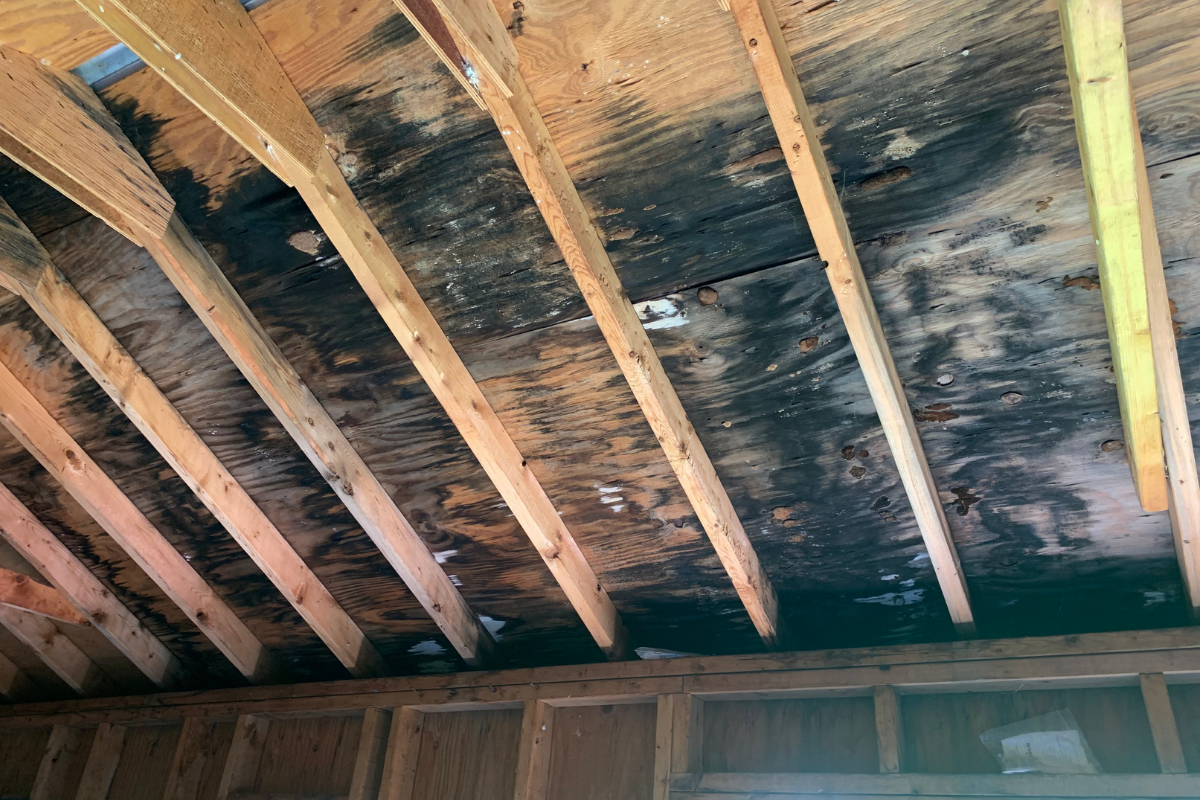
Condensation on the interior of metal walls and ceilings is a major warning sign, indicating the surface is below the interior air's dew point, which creates rust, structural decay, and respiratory hazards for livestock.
Ice dam equivalents in metal buildings show up as refreezing at the gutter line and eave penetrations, creating structural loads and water intrusion risk similar to residential ice dams.
Closed-cell spray foamis a near-universal solution formetal agricultural buildingsbecause it bonds to metal, eliminates condensation risk, and delivers a higher R-value per inch in the thin wall assemblies typical of prefabricated ag structures.
For Commercial and Business Property Owners
Commercial owners face the same warning signs with much larger financial exposure. A 20,000 square foot commercial building with poor insulation may waste $3,000 to $8,000 a month in energy costs, compared to $100 to $500 for a typical residence.
Commercial buildings are also subject to energy codes underASHRAE 90.1, which sets minimum insulation requirements for new construction and major renovations. Non-compliant buildings risk code violations, failed occupancy inspections, and insurance complications. A commercial energy audit from a certified professional can flag both performance gaps and code compliance risk in a single visit.
For General Contractors and Builders
Recognizing the signs of insulation failure matters for contractors as much as property owners. Clients calling about moisture problems, comfort complaints, or high bills are frequently experiencing one or more of the five signs in this article. Quickly identifying the root cause, insulation and air sealing failure rather than a mechanical or HVAC issue, is what sets skilled contractors apart and opens up retrofit and remediation work.
TheSpray Polyurethane Foam Alliance (SPFA)offers contractor certification programs covering the full range of spray foam insulation products.
Frequently Asked Questions
How do I know if my attic insulation is still effective?
Stand at the attic hatch and look across the attic floor. If you can see the tops of the floor joists above the insulation, you almost certainly don't have enough. The insulation should fully cover the joists and then some. If you can't see any joist tops, depth is likely adequate, though it's still worth checking that it hasn't been compressed or gotten damp, both of which cut R-value significantly.
Is there a typical age at which insulation needs replacing?
There's no universal schedule. Spray foam can last the lifetime of a building if properly installed and undamaged. Fiberglass batts installed correctly can also last for decades. Both fiberglass and cellulose, though, can be compromised by moisture, pests, settling, or physical disturbance during renovations. The signs in this article are a better indicator than age alone.
Can I add new insulation on top of old insulation?
Usually yes, with conditions. If the existing insulation is dry, intact, and free of mold or pest contamination, blown-in insulation can typically go directly on top in an attic to bring the depth up to current recommendations. If the existing material is wet, moldy, or contaminated, it needs to come out, with the structure underneath inspected and treated before anything new goes in.
What R-value do I need for my climate zone?
As a general guide based onDOE recommendations:
Attics in climate zones 1-2 (hot, humid): R-30 to R-38
Attics in climate zones 3-4 (mixed): R-38 to R-49
Attics in climate zones 5-7 (cold to subarctic): R-49 to R-60
Exterior walls: generally R-13 to R-21 for cavity insulation, depending on assembly
How long does an insulation project take?
A typical attic blown-in project for a 1,500 to 2,000 square foot home takes 4 to 8 hours including prep and cleanup. Spray foam projects take longer, since the foam needs cure time before adjacent work can proceed. A whole-home upgrade covering attic, basement, and crawl space typically spans one to three days depending on scope.
The Bottom Line
The five signs your home needs new insulation aren't subtle once you know to look for them. They show up as real costs on your utility bill, real comfort problems day to day, and real structural risk to the property. The main reason most homeowners don't act sooner is that they haven't connected what they see to what it means for their finances.
A $300 monthly excess energy cost adds up to $3,600 a year. Over five years, that's $18,000 in avoidable spending, and that figure doesn't include the moisture damage, mold remediation, or HVAC replacement that inadequate insulation tends to accelerate.
A typical residential insulation upgrade runs $2,500 to $8,000 depending on scope and product choice, with a payback period of three to six years in energy savings alone. Add avoided repair costs, better comfort, improved air quality, and the case becomes fairly straightforward.
If any of this sounds familiar, a good next step is checkingwhether your specific symptoms match a spray-foam-solvable problem, booking an energy audit, and getting at least two contractor quotes before deciding on a plan.Driftless Foam offers free assessmentsif you want a professional read on which of these five signs your home is actually showing.
