Spray Foam Insulation on Ceiling: Benefits, Costs & FAQ for Homeowners
Home Improvement, Spray Foam Insulation
Spray Foam Insulation on Ceiling: A Complete Guide for Comfortable, Efficient Homes
Considering spray foam insulation on your ceiling? Learn how spray foam ceiling insulation improves comfort, cuts energy bills, and protects your home for the long term.
Why Spray Foam Ceiling Insulation Is Worth Considering
Ceilings and rooflines are some of the biggest sources of energy loss in a home. Warm air naturally rises, and without a proper air and thermal barrier, it escapes through gaps, cracks, and poorly insulated surfaces. Spray Foam Insulation solves this by expanding to fill every crevice, creating a continuous seal that traditional batts or loose-fill products simply cannot match.
When you choose spray foam ceiling insulation, you are investing in more than just R-value. You are adding air sealing, moisture resistance, and long-term performance in one application. This is why many homeowners and builders now prefer spray foam insulation on ceiling surfaces, especially in attics, vaulted ceilings, and cathedral roof assemblies.
How Spray Foam Insulation on Ceiling Works
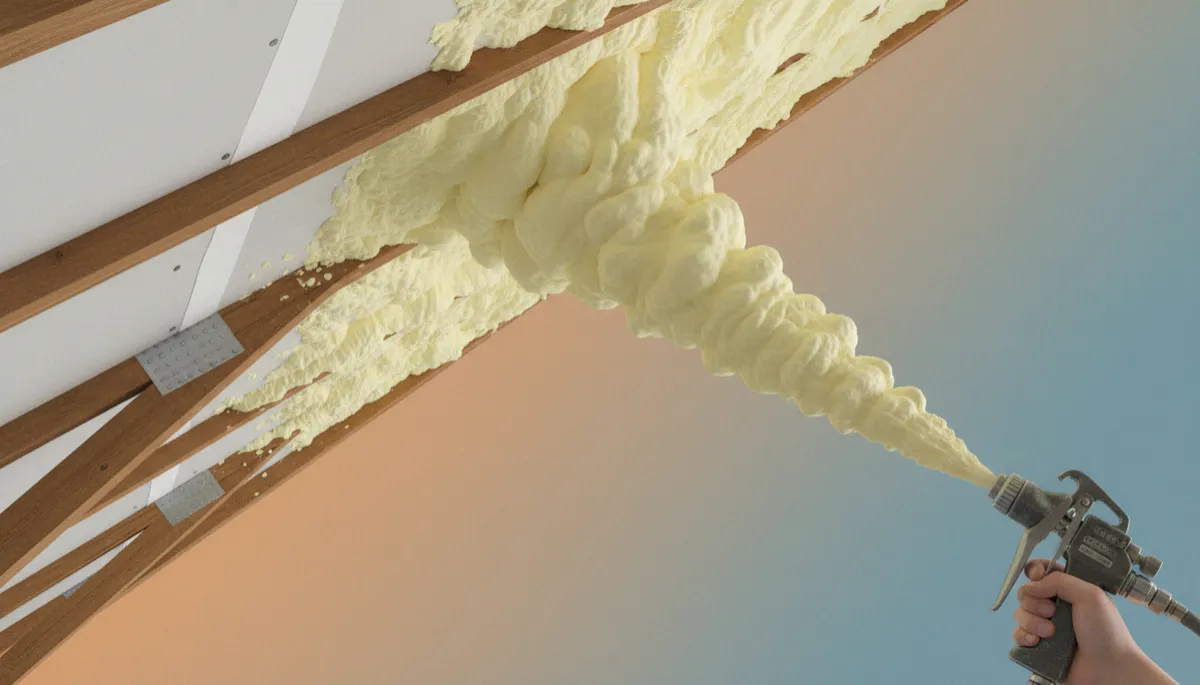
Spray foam is applied as a liquid mixture that quickly expands into a rigid foam. On ceilings, it is typically sprayed directly onto the underside of the roof deck, between joists or rafters, or on the back of drywall in new construction. Once cured, it forms a durable layer that resists heat transfer and helps prevent conditioned air from escaping your living space.
Air sealing: The foam expands to fill gaps around pipes, wiring, and framing, reducing drafts and hot or cold spots.
Thermal resistance: High R-values per inch help keep heat where it belongs, improving both winter and summer comfort.
Moisture control: Closed-cell spray foam can act as a vapor barrier, helping protect against condensation and potential mold growth.
For a deeper look at how our process works from start to finish, visit our spray foam insulation service page to see typical project timelines and installation steps.
Key Benefits of Spray Foam Ceiling Insulation
Homeowners often notice the difference from spray foam insulation on ceiling surfaces almost immediately. Beyond comfort, there are several measurable advantages that make this upgrade highly attractive:
Lower energy bills: By limiting heat loss in winter and heat gain in summer, your HVAC system does not need to work as hard, which can translate into significant energy savings over time.
Improved indoor comfort: Fewer drafts, more stable temperatures, and better humidity control contribute to a more comfortable living environment in every season.
Noise reduction: Spray foam can help dampen outdoor noise and sound transfer between floors, creating a quieter home.
Long-term durability: Properly installed spray foam ceiling insulation does not sag, settle, or shift over time, helping maintain performance for decades.
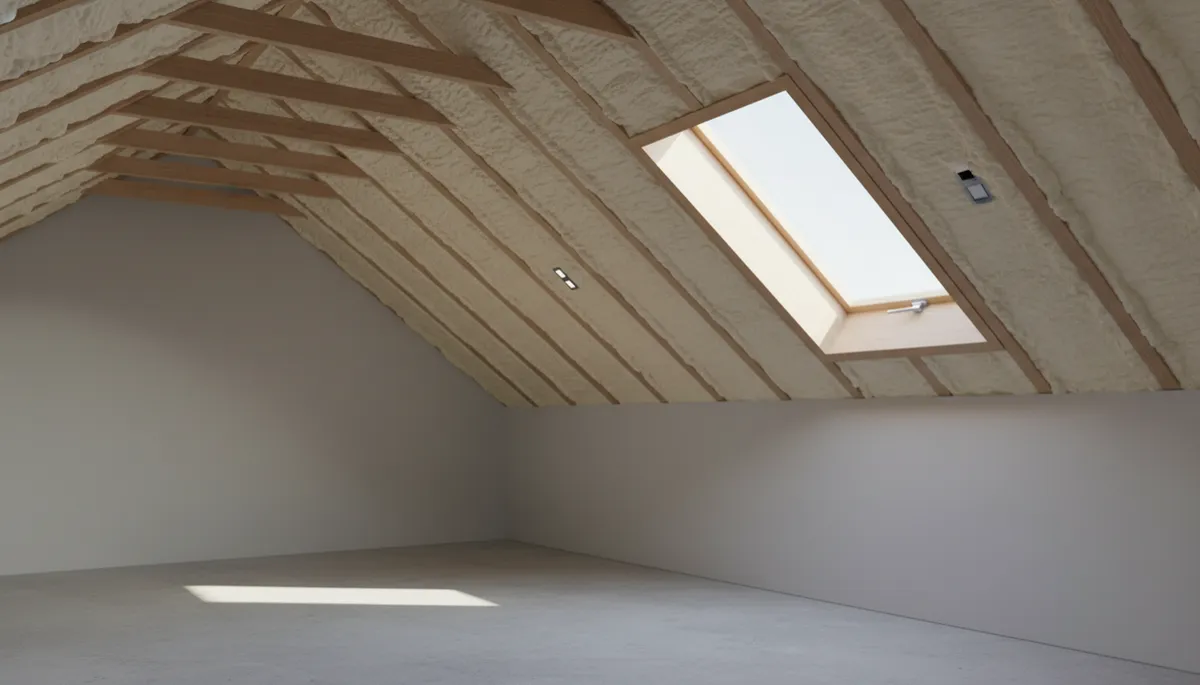
Properly insulated ceilings can significantly reduce energy waste and improve overall comfort.
Is Spray Foam Ceiling Insulation Right for Your Home?
Every property is different, and the best insulation strategy depends on your climate, roof design, and existing materials. Spray foam insulation on ceiling assemblies is particularly effective for:
Attics that are converted into living spaces or home offices
Homes with complex rooflines where traditional insulation leaves gaps
Properties experiencing chronic drafts or uneven temperatures between floors
If you are unsure whether spray foam ceiling insulation is your best option, our team can perform an on-site assessment and recommend a tailored solution. You can explore more energy-efficiency tips and case studies on our home insulation blog for additional guidance.
Frequently Asked Questions About Spray Foam Insulation on Ceiling
1. Is spray foam ceiling insulation safe?
When installed by trained professionals following manufacturer guidelines, Spray Foam Insulation is a safe and reliable product. During installation and curing, the area should be properly ventilated and unoccupied. Once cured, the foam is inert and stable, providing long-lasting performance without off-gassing under normal conditions.
2. Can spray foam be added over existing ceiling insulation?
In many cases, yes. Existing insulation may be left in place on the ceiling floor while spray foam is applied to the roof deck above, effectively creating a conditioned attic. However, each situation is unique, so it is important to have a professional evaluate ventilation, moisture conditions, and code requirements before proceeding.
3. How long does spray foam insulation on ceiling last?
Spray foam is designed to be a long-term solution. Unlike fiberglass batts that can slump or blown-in products that can shift, spray foam adheres directly to the substrate and maintains its shape. With proper installation, it can perform effectively for the lifetime of the structure with minimal maintenance.
4. Is spray foam insulation more expensive than other options?
Upfront, spray foam ceiling insulation typically costs more than fiberglass or cellulose. However, many homeowners find that the energy savings, improved comfort, and reduced air leakage provide a strong return on investment over time. When comparing quotes, consider both installation price and long-term operating costs for a fair evaluation.
Ready to Upgrade Your Ceiling Insulation?
Upgrading to spray foam insulation on ceiling assemblies is one of the most effective ways to improve comfort and efficiency in your home. From reduced energy bills to quieter, more consistent indoor temperatures, the benefits are both immediate and long-lasting. To learn more about our solutions and schedule a consultation, visit our website and discover how professionally installed spray foam ceiling insulation can transform your space.
