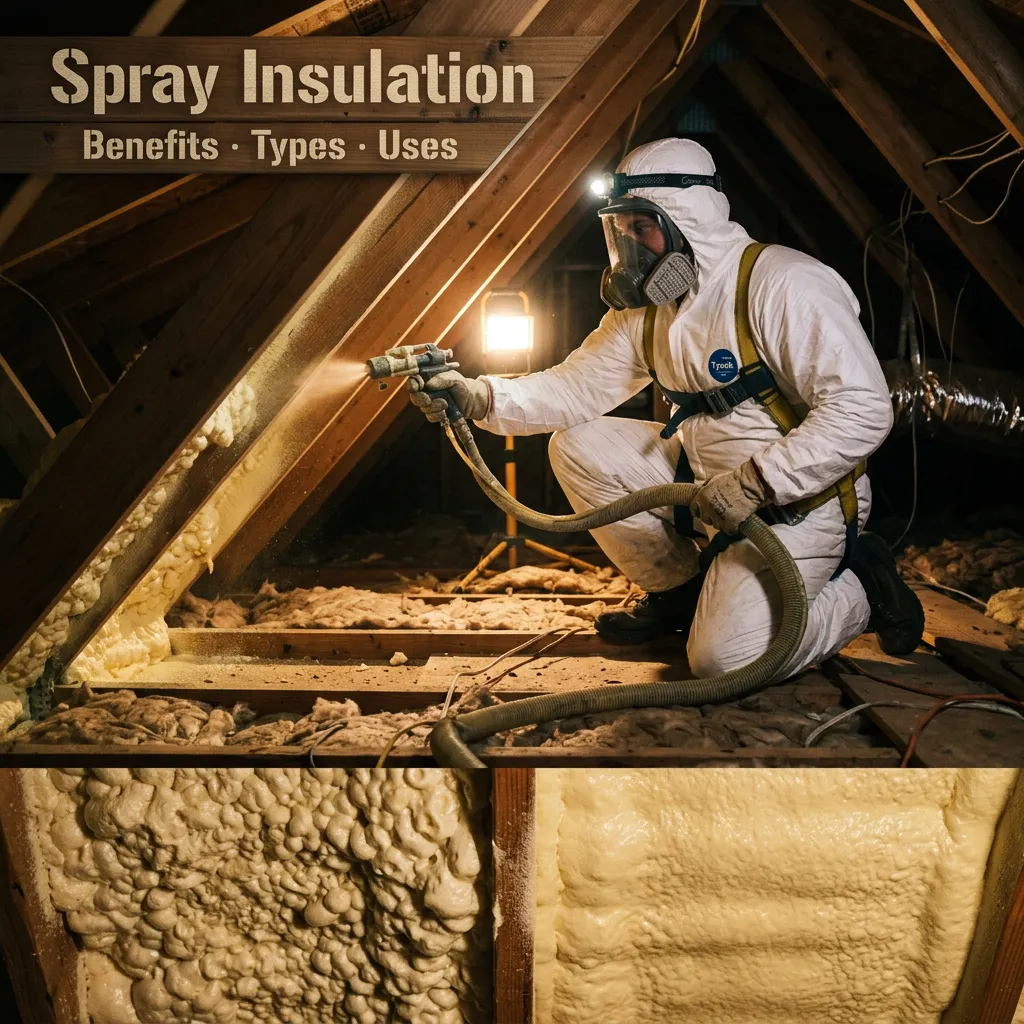
Residential Spray Insulation: Benefits, Types, and Applications
A comfortable home depends on more than a reliable heating and cooling system. The insulation inside walls, ceilings, attics, and other parts of the building envelope plays an important role in maintaining indoor temperatures throughout the year. When insulation is inadequate or air leaks are present, rooms can become uncomfortable, heating and cooling systems may work harder, and energy expenses can increase.
Residential spray insulation is one option homeowners can consider when improving their home's insulation and air sealing. Spray foam expands during application and adheres to suitable building surfaces, helping fill gaps and reduce unwanted air movement while providing thermal insulation.
For homeowners in Wisconsin, where winters can be cold and summers can bring considerable heat and humidity, choosing an appropriate insulation system can make a meaningful difference to indoor comfort. Understanding how spray foam works, where it can be installed, and which type is suitable for a particular home can help you make a more informed decision.
What Is Residential Spray Insulation?
Residential spray insulation generally refers to spray-applied insulation used in houses and other residential buildings. Spray polyurethane foam is a common option because it expands after application and can form a relatively continuous insulation and air barrier when installed correctly.
Unlike some traditional insulation materials that primarily slow heat transfer, spray foam can also help limit uncontrolled air movement through cracks and gaps in the building envelope.
It can be considered for several areas of a home, including:
Attics and roof assemblies
Exterior wall cavities
Rim joists
Crawl spaces
Basements
Certain garage assemblies
Hard-to-reach areas around building penetrations
The appropriate application depends on the home's construction, existing insulation, moisture conditions, ventilation requirements, and applicable building codes.
How Does Spray Foam Insulation Work?
Spray polyurethane foam is created when its components react during application, causing the material to expand and form a foam structure. Once properly installed and cured, the foam helps resist heat transfer and can reduce air leakage through suitable parts of the building envelope.
Heat naturally moves between warmer and cooler areas. During winter, heat from a heated home tends to move toward colder outdoor conditions. During summer, heat can enter through the roof, walls, and other building components.
Insulation slows this heat transfer. Air sealing addresses a different problem by limiting the movement of air through gaps in the structure.
Spray foam can help with both functions, depending on the product and installation. The result is a building envelope that may maintain indoor temperatures more consistently when the entire insulation system is designed correctly.
Key Benefits of Residential Spray Insulation
1. Improved Indoor Comfort
Uneven temperatures can make certain rooms uncomfortable, particularly those near poorly insulated attics, exterior walls, garages, or crawl spaces.
Residential spray insulation can help reduce heat transfer and unwanted air movement in suitable applications. This may help rooms maintain more consistent temperatures throughout the year.
For example, if a bedroom becomes noticeably colder than the rest of the house during winter, an assessment of the attic, exterior walls, and air leakage pathways may identify opportunities to improve insulation performance.
2. Reduced Air Leakage
Small gaps around framing, penetrations, and joints can allow conditioned air to escape. These openings can also let outdoor air enter the home.
Spray foam expands into suitable gaps and adheres to many building surfaces, helping create a more continuous air barrier.
Reducing uncontrolled air leakage can improve comfort and may reduce heating and cooling demand. Actual savings depend on the home's existing condition, climate, energy prices, HVAC equipment, and the quality of the installation.
3. Better Energy Efficiency
When a home has inadequate insulation or significant air leaks, the heating and cooling system may need to operate longer to maintain the desired temperature.
Improving insulation and air sealing can reduce some of this demand. However, the results vary by property, so homeowners should be cautious about guaranteed savings claims.
A professional assessment can help identify whether spray foam is likely to address the main causes of energy loss or whether other improvements should be prioritized.
4. Support for Moisture Management
Moisture is an important consideration in residential insulation projects. Air leakage can carry moisture into building cavities, where it may contribute to condensation under certain conditions.
Closed-cell spray foam has properties that can make it useful in specific applications where additional moisture resistance is required. However, it does not eliminate every moisture risk.
Roof leaks, plumbing leaks, drainage problems, and existing dampness should be corrected before insulation is installed. The complete wall or roof assembly must also be designed to manage moisture appropriately.
5. Insulation for Irregular Spaces
Older homes often have irregular framing, narrow cavities, and gaps that can be difficult to seal with conventional materials.
Spray foam can expand into suitable spaces and around many penetrations, making it useful for selected hard-to-reach areas.
Nevertheless, not every cavity should be filled without inspection. Existing wiring, plumbing, moisture conditions, and the assembly's ventilation requirements should be evaluated before installation.
Open-Cell vs. Closed-Cell Residential Spray Insulation
Two common types of spray polyurethane foam are open-cell and closed-cell foam. Each has different physical properties and potential applications.
Open-Cell Spray Foam
Open-cell spray foam has a lower density and expands considerably during installation. It is often considered for suitable interior applications where air sealing and thermal insulation are needed.
Potential advantages include:
Effective air sealing when properly installed
Flexibility for certain framed cavities
Sound absorption benefits in appropriate assemblies
Lower material density than closed-cell foam
Open-cell foam is more vapor permeable than closed-cell foam. This means moisture management and the location of the foam within the building assembly are important considerations.
Closed-Cell Spray Foam
Closed-cell spray foam has a higher density and generally provides greater insulation value per inch than open-cell foam. It also offers greater resistance to water vapor movement.
Potential advantages include:
Higher thermal resistance per inch
Effective air sealing
Greater resistance to water vapor movement
Suitability for certain applications with limited insulation space
Closed-cell foam is not automatically the best choice for every home. Its suitability depends on the construction details, moisture conditions, budget, and project requirements.
The best option is the one that works with the entire building assembly rather than simply the one with the highest insulation value.
Where Can Spray Foam Be Installed in a Home?
Attics and Roof Assemblies
Attics are common sources of heat loss and air leakage. Spray foam may be installed at the attic floor or as part of a properly designed roof assembly, depending on the home's layout and insulation strategy.
Insulating the attic floor and insulating the roof deck create different building conditions. Roof-deck applications require careful attention to ventilation, moisture control, and the type of roof assembly.
Exterior Walls
Exterior walls separate indoor living areas from outdoor conditions. Spray foam can be used in suitable wall cavities to provide insulation and reduce air leakage.
Before installation, the contractor should evaluate existing wall materials, electrical components, moisture conditions, and whether the proposed assembly meets applicable requirements.
Rim Joists
Rim joists are located around the perimeter of a framed floor system. Gaps in these areas can allow outdoor air to enter the home.
Closed-cell spray foam is often considered for suitable rim-joist applications because it can provide insulation and air sealing within a relatively limited space.
Crawl Spaces and Basements
Crawl spaces and basements can affect the comfort of the rooms above them. Insulation may help reduce heat transfer between conditioned spaces and unconditioned areas.
The correct approach depends on moisture, drainage, foundation construction, and whether the space is vented or unvented. Any existing water intrusion should be resolved before insulation work begins.
Is Residential Spray Insulation Suitable for Older Homes?
Spray foam can be appropriate for many older homes, but these properties often require a more careful assessment before installation.
Older buildings may contain aging insulation, concealed moisture damage, outdated wiring, or wall assemblies that were not designed around modern insulation methods.
Adding insulation without understanding these conditions can create problems rather than solve them.
A professional evaluation should consider the home's construction, air leakage, ventilation, moisture exposure, and existing materials. In some cases, spray foam may be appropriate for selected areas. In others, conventional insulation or a combination of air sealing and insulation methods may be more suitable.
Is Residential Spray Insulation Worth the Investment?
Whether spray foam is worth the investment depends on the home's current condition and the problems the homeowner wants to address.
It may be worth considering when a property has persistent drafts, poorly insulated cavities, difficult-to-seal gaps, or temperature differences associated with the building envelope.
However, spray foam can have a higher upfront cost than some conventional insulation options. The total project cost depends on the area being insulated, the foam type, required thickness, access, preparation, and installation complexity.
Homeowners should compare estimates based on the same scope of work and consider the expected performance, durability, and maintenance requirements of each option.
A professional assessment can help determine whether spray foam, another insulation material, or a combination of improvements offers the best value for the property.
Why Professional Installation Matters
Spray foam insulation requires appropriate preparation, equipment, product selection, and installation conditions. The installer must follow manufacturer instructions and relevant safety requirements.
Improper application can result in uneven coverage, poor adhesion, inadequate thickness, or other performance problems. Installation also requires appropriate precautions because spray foam chemicals and application conditions can present health and safety risks.
Before hiring a contractor, ask about relevant training, experience, insurance, preparation procedures, ventilation requirements, and project cleanup. Homeowners should follow the product-specific re-entry and ventilation instructions after installation.
A qualified contractor should also explain why a particular foam type and installation location are suitable for the building.
Residential Spray Insulation for Wisconsin Homes
Homes across Wisconsin experience cold winters, warm summers, and seasonal humidity changes. These conditions make insulation, air sealing, and moisture management important parts of a home's overall performance.
For properties throughout the Driftless Region, the right insulation approach depends on the age of the home, its construction, existing insulation, and any issues with drafts or uneven temperatures.
Driftless Foam provides spray foam insulation services for residential properties as well as agricultural, pole barn, and commercial buildings.
Homeowners exploring residential spray foam insulation can learn more about available options through the Driftless Foam homepage. Property owners in the surrounding region can also explore spray foam insulation in La Crosse and spray foam insulation in Onalaska to learn about local service availability.
Frequently Asked Questions About Residential Spray Insulation
1. What is residential spray insulation?
Residential spray insulation is insulation applied by spraying it onto suitable building surfaces or into appropriate cavities. Spray polyurethane foam can provide thermal insulation and help reduce air leakage when installed correctly.
2. Is spray foam insulation good for homes?
Spray foam can be an effective option for homes with air leakage or insulation deficiencies. Its suitability depends on the building assembly, moisture conditions, installation requirements, and the homeowner's goals.
3. What is the difference between open-cell and closed-cell spray foam?
Open-cell foam has a lower density and is more vapor permeable. Closed-cell foam has a higher density, greater insulation value per inch, and greater resistance to water vapor movement. The appropriate type depends on the specific application.
4. Can residential spray insulation lower energy bills?
Improving insulation and reducing air leakage may reduce heating and cooling demand. The actual savings depend on the home's condition, local climate, energy prices, HVAC system, and installation quality.
5. Where should spray foam insulation be installed in a house?
Potential applications include attics, suitable roof assemblies, exterior wall cavities, rim joists, crawl spaces, and basements. The correct locations should be determined through an assessment of the building envelope.
6. How long does residential spray foam insulation last?
Properly installed spray foam can last for many years when used in a suitable building assembly and protected from damaging conditions. Its long-term performance depends on installation quality, moisture exposure, building movement, and the condition of surrounding materials.
7. Should I hire a professional for residential spray insulation?
Professional installation is recommended because product selection, surface preparation, application conditions, safety precautions, and building assembly requirements all affect performance. An experienced contractor can assess the property and recommend a suitable approach.
Improve Your Home's Comfort With the Right Insulation
Residential spray insulation can help address air leakage and insulation deficiencies in suitable parts of a home. The key is identifying where the building is losing performance and selecting a solution that works with the structure.
If your home has drafts, uneven temperatures, cold floors, or insulation that needs attention, a professional evaluation can help you understand the available options.
Driftless Foam serves homeowners throughout the Driftless Region and surrounding communities. Contact the team to discuss your property and determine whether spray foam insulation is an appropriate solution for your home.
