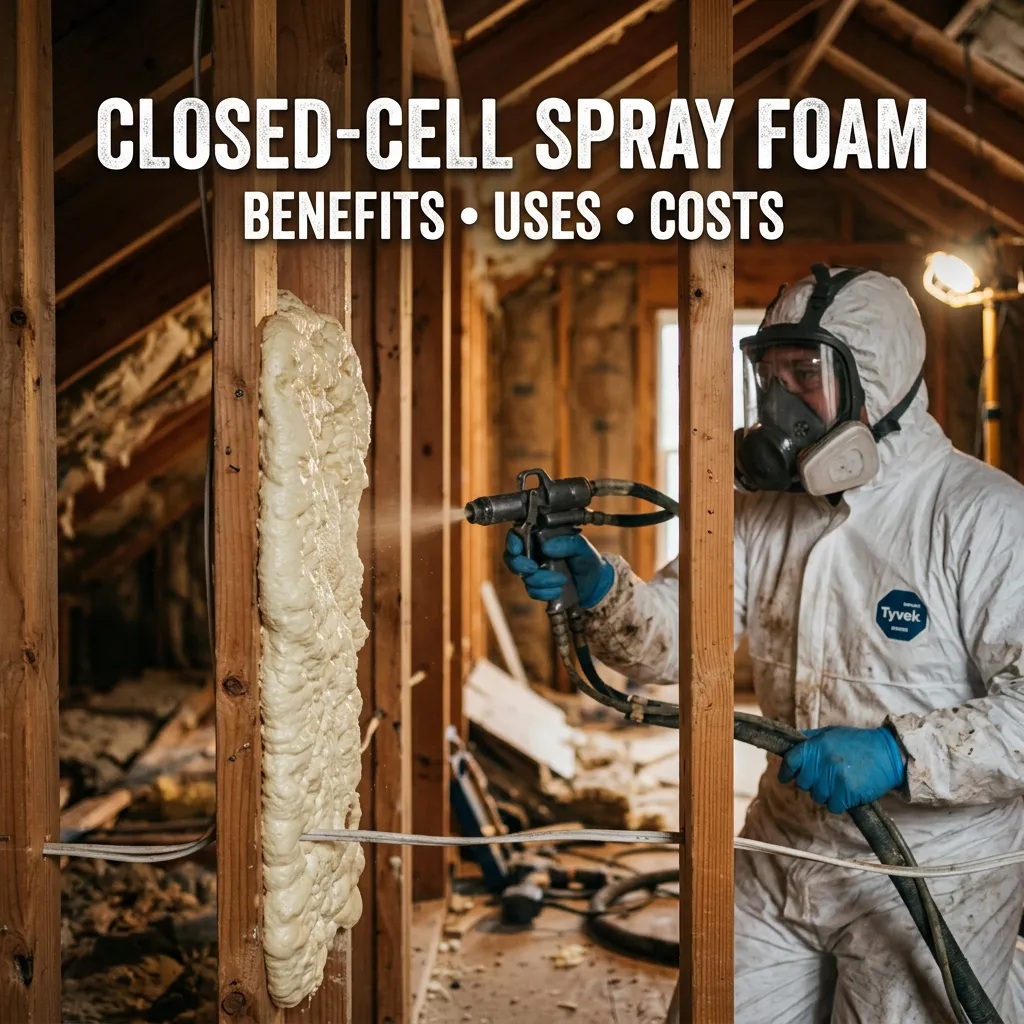
Closed Cell Spray Foam Insulation: Benefits, Uses, and Costs
Choosing the right insulation can make a significant difference in a building's comfort, energy performance, and ability to manage moisture. For homeowners and property owners in Wisconsin, these considerations are especially important because buildings must handle cold winters, warm summers, and changing humidity levels throughout the year.
Closed Cell Spray Foam Insulation is a popular option for projects that require effective thermal insulation, air sealing, and resistance to water vapor movement. Its dense structure and relatively high insulation value per inch make it suitable for a range of applications, including certain wall assemblies, rim joists, crawl spaces, pole barns, and commercial buildings.
However, closed-cell foam is not automatically the best solution for every property. Understanding how it works, where it can be installed, and how it compares with other insulation materials can help you decide whether it fits your project.
What Is Closed Cell Spray Foam Insulation?
Closed-cell spray foam is a type of spray polyurethane foam made up of tightly packed cells that contain gas. This structure gives the material its relatively high density and insulation performance.
When professionally applied, the foam expands and adheres to suitable building surfaces. It can create an effective air barrier while providing thermal resistance and limiting water vapor movement through the insulated area.
Closed-cell spray foam typically provides an insulation value of approximately R-6 to R-7 per inch, although the exact value depends on the product. Its performance makes it useful where insulation space is limited or where additional resistance to moisture movement is desirable.
The finished result depends on more than the foam itself. Surface preparation, application thickness, temperature, substrate condition, and installation quality all influence performance.
Key Benefits of Closed Cell Spray Foam Insulation
1. High Insulation Value in Limited Space
One of the main advantages of closed-cell spray foam is its relatively high R-value per inch compared with many conventional insulation materials.
This can be useful in wall cavities, rim joists, and other areas where there is limited space for insulation.
For example, a building with shallow framing may benefit from an insulation material that provides substantial thermal resistance without requiring a deeper cavity. The appropriate thickness still depends on local building requirements and the design of the assembly.
2. Effective Air Sealing
Uncontrolled air movement can make a building uncomfortable and increase heating and cooling demand. Small gaps around framing, joints, and penetrations may allow outdoor air to enter and conditioned air to escape.
Closed-cell spray foam expands and adheres to suitable surfaces, helping seal these openings when installed correctly.
Reducing air leakage can help limit drafts and improve temperature consistency. However, the building still needs an appropriate ventilation strategy to maintain indoor air quality.
3. Resistance to Water Vapor Movement
Closed-cell spray foam has lower water vapor permeability than open-cell foam, making it useful in certain assemblies where limiting vapor movement is important.
This property can be beneficial in specific applications, but it does not mean the foam makes a building completely waterproof.
Roof leaks, foundation water intrusion, plumbing leaks, and drainage problems must be addressed separately. The entire wall, roof, or foundation assembly should be designed to manage moisture appropriately.
4. Improved Indoor Comfort
Poor insulation and air leakage can cause some rooms to feel colder than others, especially during winter.
By reducing heat transfer and helping control air movement, closed-cell spray foam can contribute to more consistent indoor temperatures.
The improvement depends on the condition of the existing insulation, the extent of air leakage, and whether other problems, such as inadequate HVAC distribution, are also present.
5. Suitable for Several Building Types
Closed-cell spray foam is used in a variety of residential, agricultural, and commercial applications.
Depending on the building design, it may be appropriate for:
Exterior wall cavities
Rim joists
Certain basement and crawl space assemblies
Roof decks and selected attic assemblies
Pole barns and agricultural buildings
Metal building assemblies
Commercial structures with specific insulation requirements
Not every application is appropriate for every foam product. The contractor should evaluate the assembly before recommending installation.
Where Is Closed Cell Spray Foam Commonly Used?
Residential Homes
Homeowners may consider closed-cell foam when addressing drafts, inadequate insulation, or difficult-to-seal areas.
Rim joists and selected wall or roof assemblies are common applications. It can also be considered in certain basement and crawl space projects, provided the moisture conditions and construction details are suitable.
Before insulating an existing home, it is important to identify water intrusion, deteriorated materials, and other issues that should be corrected first.
Pole Barns and Agricultural Buildings
Pole barns and agricultural buildings can have different insulation requirements depending on how they are used.
A building used for equipment storage may have different needs from one used as a workshop or occupied workspace. Moisture production, heating, ventilation, and the construction of the metal or wood building envelope should all influence the insulation plan.
Closed-cell spray foam can be useful in suitable pole barn applications because it provides insulation and air sealing while offering greater resistance to water vapor movement than open-cell foam.
Proper detailing is important to reduce the risk of condensation and corrosion in metal building assemblies. The insulation system must be compatible with the building's intended use and ventilation requirements.
Garages and Workshops
Detached garages, attached garages, and workshops may benefit from improved insulation when owners want to maintain more comfortable temperatures or reduce drafts.
However, garage ceilings and walls adjoining living spaces may have fire separation and other code requirements. Foam plastic insulation generally needs to comply with applicable thermal or ignition barrier requirements.
A qualified contractor should determine which materials and protective coverings are required for the specific installation.
Commercial and Metal Buildings
Commercial buildings often have large wall and roof areas where heat transfer and air leakage can affect operating conditions.
Closed-cell foam may be suitable for selected metal building assemblies, warehouses, workshops, and other structures. The choice depends on the building's use, roof design, moisture conditions, fire safety requirements, and energy performance goals.
For commercial projects, insulation should be considered alongside ventilation, mechanical systems, drainage, and the overall building envelope.
Closed Cell vs. Open Cell Spray Foam Insulation
Both open-cell and closed-cell spray foam can provide insulation and air sealing, but they have different characteristics.
Feature | Closed-Cell Foam | Open-Cell Foam |
|---|---|---|
Density | Higher | Lower |
Insulation per inch | Generally higher | Generally lower |
Water vapor movement | More resistant | More permeable |
Space requirements | Useful where space is limited | Expands significantly within suitable cavities |
Common considerations | Higher material cost and assembly design | Cavity depth and moisture management |
Best choice | Depends on the building assembly | Depends on the building assembly |
Closed-cell foam is often selected when higher insulation value per inch or greater resistance to water vapor movement is important. Open-cell foam may be appropriate where its lower density, expansion characteristics, and other properties better suit the project.
Neither product is universally superior. The correct selection depends on the building design, climate, available space, budget, and moisture control strategy.
Is Closed Cell Spray Foam Insulation Good for Wisconsin Winters?
Wisconsin winters make insulation and air sealing important considerations for residential and commercial properties.
Closed-cell spray foam can help reduce heat transfer and air leakage in appropriate building assemblies. Its higher insulation value per inch can be particularly useful in areas with limited room for insulation.
However, insulation performance depends on the complete building envelope. Roof and wall design, attic insulation, ventilation, windows, doors, and the heating system all influence overall comfort and energy use.
For properties throughout the Driftless Region, an assessment of the building's existing condition can help identify where closed-cell foam may provide meaningful benefits.
Homeowners can explore spray foam insulation in La Crosse or spray foam insulation in Onalaska to learn more about local insulation services.
What Does Closed Cell Spray Foam Insulation Cost?
The cost of closed-cell spray foam insulation depends on several factors, including:
The total area being insulated
Required foam thickness
Accessibility of the installation area
Surface preparation requirements
Removal of existing insulation, if needed
Building construction and substrate condition
Project size and installation complexity
Closed-cell foam often has a higher upfront material cost than some conventional insulation options. However, comparing materials based only on price per square foot can be misleading because their insulation values, air-sealing properties, and installation requirements differ.
Ask contractors for written estimates that specify the foam product, intended thickness, estimated coverage, preparation work, and any additional protective materials required.
The most suitable option should meet the building's performance requirements while fitting the available budget.
Is Professional Installation Necessary?
Professional installation is strongly recommended for most closed-cell spray foam projects.
Spray polyurethane foam involves chemical components that require appropriate handling, protective equipment, application conditions, and ventilation. Improper installation can result in poor adhesion, uneven coverage, inadequate thickness, or other performance problems.
Before hiring a contractor, ask about training, experience, product specifications, insurance, and the procedures followed during installation.
A professional should also evaluate the existing building assembly and identify moisture or structural issues that need to be resolved before the foam is applied.
Occupants should follow product-specific re-entry and ventilation instructions during and after installation.
How to Prepare for a Closed Cell Spray Foam Project
A successful insulation project begins with a clear understanding of the building's needs.
First, identify the areas where insulation or air sealing may be inadequate. Drafts, uneven temperatures, and visible insulation gaps can indicate that an assessment is worthwhile.
Next, have the proposed installation area inspected for water intrusion, deteriorated materials, and other conditions that could affect the foam.
Finally, compare contractor recommendations and written estimates. The proposal should explain where the foam will be installed, how thick it will be, and what preparation or protective measures are required.
Taking these steps helps ensure that the insulation solution is suited to the building rather than selected solely because of its advertised benefits.
Frequently Asked Questions About Closed Cell Spray Foam Insulation
1. What is the R-value of closed-cell spray foam insulation?
Closed-cell spray foam typically provides approximately R-6 to R-7 per inch, depending on the product. The required thickness depends on the building assembly, climate, and applicable energy code.
2. Is closed-cell spray foam better than open-cell foam?
Not in every situation. Closed-cell foam generally provides higher insulation value per inch and greater resistance to water vapor movement. Open-cell foam may be more appropriate for other applications. The right choice depends on the building design and project requirements.
3. Can closed-cell spray foam help reduce heating costs?
It can help reduce heat loss and air leakage in suitable applications, potentially lowering heating demand. Actual savings depend on the building's existing condition, insulation levels, energy prices, HVAC system, and installation quality.
4. Can closed-cell spray foam be used in pole barns?
Yes, it can be suitable for certain pole barn and metal building applications. The contractor should evaluate condensation risk, the building's intended use, ventilation, and the compatibility of the insulation system with the structure.
5. Does closed-cell spray foam stop water leaks?
No. Although closed-cell foam resists water vapor movement and can resist liquid water under certain conditions, it should not be treated as a substitute for repairing roof leaks, foundation water intrusion, or other sources of moisture.
6. How long does closed-cell spray foam insulation last?
Properly installed foam can remain effective for many years when used in a suitable assembly and protected from damaging conditions. Its longevity depends on installation quality, moisture exposure, building movement, and the condition of surrounding materials.
7. Is closed-cell spray foam worth the higher cost?
It may be worthwhile when high insulation value per inch, effective air sealing, or greater resistance to water vapor movement is important. Comparing written estimates and evaluating the building's specific needs can help determine whether the additional cost is justified.
Choose the Right Insulation for Your Property
Closed-cell spray foam insulation can be a valuable option for improving thermal performance and air sealing in suitable residential, agricultural, and commercial buildings. Its relatively high insulation value per inch and resistance to water vapor movement make it useful for specific applications, particularly where space or moisture control requires careful consideration.
The best results come from choosing the right product, understanding the building assembly, and ensuring that installation follows appropriate safety and building requirements.
Driftless Foam provides spray foam insulation services for properties throughout the Driftless Region and surrounding communities. Visit the Driftless Foam to learn more about its services and discuss the insulation needs of your property.
